Saturday, April 25, 2020

Where Is God? Father Sebastian AthappillyReflects On Notions About God, Transcendence And Immanence

By Roshan Shah, New Age Islam

25 April 2020

Father Sebastian Athappilly

Q: There are so many different understandings of God, and one can get so confused! Some people say something about God, and some others might say quite the opposite. For instance, take the issue of where God is.

If you ask people where God is, they may give very different answers. Someone might point upwards and say that God lives in Heaven. Someone else may point to their heart and say that God resides there. Others might say that God is everywhere—and that includes every single particle in the universe. In contrast, yet others might say that God is completely beyond the universe. Some may believe that God is immanent in the universe, while others insist that God is utterly transcendent.

How do you see this issue? Where do you think is God? Do you think God is in this universe, pervading it entirely, or do you think God is utterly beyond? Or both, if that is possible? If God is utterly different from His creatures—totally transcendent—as some people might believe, then is it that He is not located in the universe and that He exists in some realm outside and beyond the universe? If so, what proof is there that there is indeed such a realm? If God is utterly transcendent, how is it also possible for Him to be omnipresent, because omnipresence might seem negate utter transcendence? Doesn’t the belief that God is not at all present in the universe present an image of a limited God? But we think of God as Unlimited, and the Unlimited God must be present everywhere, including throughout the universe.How do you see all these issues?

A: First of all, the question “where” God is presupposes the anthropomorphic notion of God as a bodily being that is located in a place. There is nothing surprising about this, since we as bodily beings cannot imagine and think otherwise. At the same time, however, we should be aware of the limitations of our imagination as we are dealing with purely spiritual and immaterial reality. Given this, how can we answer the question, once it is posed and asked?
We cannot rule out God’s presence in this universe, as He is the Creator of this universe. At the same time, we have to add that God is not only in this universe; He is also beyond it. We cannot say that God is only beyond this universe, as if God has nothing to do with this universe. Hence, if at all we would answer the question of His so-called place, one answer would be: God is in this universe and beyond it.

I remember in this connection the answer of a boy, the son of a medical doctor, that God has His home in the heavens and His praxis in this universe!

One answer of faith is that God is omnipresent. This means that God is present everywhere, at every time. Since everything is God’s creation or creature, God is present everywhere and in everything. To hold that God is nowhere would amount to saying that there is no God. One way of affirming God’s existence and at the same time avoiding an anthropomorphic way of speaking would be to say that God is everywhere. God cannot be limited locally to a certain fixed place. Another way might be to say God is there where you pray!

Our attempt to localise and delimit or define God is in itself against the very nature of God. If we understand God as the Ground of all reality, the question of God’s place gets a different connotation. God is not in this universe as one of its many beings, but, rather, at the very basis of this universe as its sustaining Foundation and the Horizon of our scope! Just as the horizon is not in this universe and the Ground of this universe is not an entity within this universe, so, too, God is not a being among the many other beings, but Being as such, from whom all beings have their being or existence. In this way, God is immanent as well as transcendent at the same time!  It is precisely in this way that God is utterly different from the creatures of this universe.

This leads us to the next question: if God is utterly different from His creatures, utterly transcendent, as some people might believe, then is it that He is not located in the universe and that He exists in some realm outside and beyond the universe? If so, what proof is there that there is indeed such a realm?

We should understand properly what is meant by saying that God is utterly different from the creatures. It does not mean that there is no point of contact at all between God and creation or creatures. The Creator cannot but leave the marks of His handwriting upon His creatures. There is a certain resemblance between the Creator and His creatures in various degrees. This similarity is the strongest among the creatures of spiritual nature, humans as well as angels. In the Bible, this is expressed in the statement about the creation of humankind, when it is related that God created humans in His own image and likeness (Genesis 1: 27). This divine image in the rational creatures is manifested in the faculties of knowing (the truth) and loving (the good). This is the ability of a spiritual being, which enables it to relate itself to and with another being of the same nature.

The ability to relate oneself with other beings of the same nature is called relationality or personality. Persons enter into relationship. The whole history of revelation and salvation is the story of this relationship between God and His creatures. The first commandment that we should love God has its basis precisely on this truth.

Powers cannot love mutually; they can only interact. Let us take the example of magnets. They can attract or repel, but that is not in itself loving or hating. God and creatures are not separated by an unbridgeable gap. Rather, there is an affinity between both of them. The whole question of the covenant or partnership between God and His people is based on this (Genesis 15:18; 17:9-11; Exodus 6:7; Sirach 44 :17-29). A somewhat equivalent secular term is ‘contract’ or ‘agreement’.

According to the Hebrew Bible, or what Christians call the Old Testament, God enters into a covenant partnership with human beings, with Abraham, with the people of Israel, with the whole humanity. The prophet Jeremiah speaks of a new covenant as well (Jer 31:31). According to Christian belief, Jesus takes this up and makes the new covenant with his blood (Mark 14:23).

The main message is that God accepts humankind and each one of us as His partner in love. The symbolism of marriage is hence often used to express this relationship. God as the Bridegroom and the people as the bride. Prophet Hosea is a good example in this regard. The wonder of God's love is that such a great God accepts human being(s) as His loving partner or spouse! This is the wonder of love! Only a personal God can do this. An impersonal or a-personal God cannot enter into a contract. This presupposes also some affinity of relationship between God and the spiritual creature, a transcendence that does not destroy intimacy!

The very concept of revelation as God‘s loving self-disclosure tells of a personal God addressing a personal addressee. From the Christian perspective, it is precisely because there is an inner affinity between God and human creatures that God could become human. From the Christian point of view, in God’s incarnation as a human being, it is demonstrated that God is not utterly different from the creatures.

By using the wise method of analogy, we may hence say that God “sees”, “hears”, “loves”, etc. So, we speak of God’s “hands” and God’s “voice”. Whatever God is and has related to our perfections, God is and has to their ultimate degree. God’s essence is to exist, while the creatures have participatory existence, beauty, goodness, etc. We do not say that the creatures do not exist or that they do not have beauty. All what the creatures have is received from God, the Source.

Now, about the issue of a realm beyond the universe: The proof that there is a realm outside and beyond the universe is precisely the dependent existence of this universe. The present crisis owing to the novel Corona virus (Covid 19) is evidence of the inability of humankind to have full control of the global situation and also of the dependency of this universe on a higher Reality. If this universe would have been the only realm, this universe itself would have been self-explanatory and autonomous. In that case, it should not have had a beginning or have an end. But science has proved just the opposite. A reality that had a temporal beginning and that will definitely have a temporal end cannot be its own source. A realm outside and beyond it is the only conclusion!

You mention that some people who have a certain understanding of God’s transcendence might believe that God is not at all present in the universe. Does this belief, you want to know, not present an image of a limited God, because the Unlimited God must be present everywhere, including throughout the universe?

I would respond by saying that a ‘God’ who is not at all present in the universe is a purely transcendent ‘God’, who has nothing to do with this universe. Such a ‘God’ is, in fact, not God, for this ‘God’ is, according to the above erroneous imagination of a few believers, only beyond the universe but not active in the universe. But if God is not active in the universe, the universe cannot exist at all; otherwise you make the universe into God! The contradiction exists not merely owing to the wrong idea of a limited God but also because of the misconception of an unlimited universe! Both are wrong. There is neither a limited or finite God nor an infinite or unlimited universe! If one believes in God, then it should be a belief in God who is transcendent and at the same time present everywhere, that is, also in the universe.

To be present in the universe does not, however, mean that God is present there as an entity or a being among many other beings. It rather means that God is active throughout the universe; without God sustaining the universe, the universe would cease to exist! God’s transcendence does not allow us to conceive of Him as merely as a being in this universe adjacent to many other beings. If this is what is intended by those who might believe that God is not at all present in the universe, then we may agree with them. But if they think God is not at all present in the universe in the sense of being active there, then they are wrong, even though they want to safeguard God’s transcendence so. God’s transcendence is not diminished or negated by His immanence in the universe!

As to your question about how I see the issue of God’s immanence and transcendence, according to me God’s transcendence is so unique that it can allow God’s immanence! God is immanent in this universe precisely as its transcendent Ground, loving Mover and ultimate End (Absolute Future)!

Fr. Sebastian Athappilly is a Catholic priest from Kerala belonging to the CMI (Carmelites of Mary Immaculate) religious congregation. He has been teaching Systematic Theology from 1985 at Dharmaram Vidya Kshetram, a leading centre for higher Catholic learning, located in Bangalore. He served there as the President, Dean (Faculty of Theology) and Registrar. Since 2009 he has also been serving as hospital chaplain at the University Clinic, Graz, Austria, besides being a visiting professor at Dharmaram Vidya Kshetram.


Thursday, April 23, 2020

Ramadan Tarawih Prayer, Itekaaf and Our Responsibilities During Lockdown

By Mufti Asjad Raza Qadri, Tr. New Age Islam
(Translated from Urdu by New Age Islam)
23 April 2020

Given the Coronavirus devastation, the nationwide lockdown in India has been extended to May 3, 2020. Amidst this lockdown period, the month of Ramadan will start. As a result, Muslims are concerned about offering Tarawih prayers, paying Zakat and Sadaqah. In this regard, Muslims must offer obligatory, compulsory and other acts of worship as per the following guidelines:
(1)  Only the number of the people allowed by the Indian administration to offer daily five-time obligatory prayers in mosques should perform Ramadan Tarawih prayers in congregation. Tarawih is Sunnah al-Kifaya, that is, in this case it will suffice for few people (four to five) to offer Tarawih in congregation. The rest of the people must perform Tarawih individually and separately at their homes. Ala Hazrat Ahmad Raza Barelvi (may Allah be pleased with him) says, 
“As per our Sunni School of Thought, the twenty rak'ah of Taraweeh is Sunnat-e-Ain (an emphasized individual Sunna), that if a man or a woman abandons Tarawih without any legal (shari’) excuse, it will become a condemnable act (makrooh). As for Tarawih prayers in congregation (jamat), it is Sunnah al-Kifaya, that is, if few individuals of the locality offer Tarawih in their mosques and the rest of the people perform Tarawih individually and separately at their homes, there will be no blame (harj)”.     

(2)    It has been heard that in some places people have locked the mosques and sent the imams and muazzins on leave without paying them their salary, or dismissed them from their jobs. In such a critical time, it is very inappropriate to treat imams and muazzins this way (this act is not permissible in Islam). The committee members of the mosque must pay them their full salary.

(3) I'tikaaf is Sunnah al-Kifaya that if everyone abandons it, then all will be sinners and if even one person in the city does it, then all are acquitted. Henceforth amidst the lockdown, the people should not put themselves in any trouble by doing Itekaf in numbers.

(4) Due to the lockdown, many workers, labourers, individuals doing daily business and other needy people are entitled to financial assistance. As per one’s capability, one should also support them. But on this occasion, one should not humiliate them by exhibiting photography and show-off.

May Allah protect the entire world from this deadly disease and heal the sick, on behalf of the beloved Prophet (peace and blessings of Allah be upon him)


Wednesday, April 22, 2020

Ramadan: Everything You Always Wanted to Know About

By Mike Mohamed Ghouse, New Age Islam
24 April 2020

The Spirit, Politics, and Rituals of Ramadan are the three main topics of this article. Ramadan is pronounced Ramzan in the Subcontinent, Iran, Turkey, and the Central Asian Republics wherever the Persian linguistic influence exists, elsewhere in the world, it is Ramadan. In the Arabic language, "Z" is "D" and hence Ramadan.

About 50 Random pictures of Ramadan around the world are at https://www.flickr.com/photos/mikeghouse/albums/72157713982572563 Courtesy of Boston Globe

The Rituals of Ramadan


Some may disagree but starting from our birth until the last rites of our lives and beyond, every moment is filled with rituals. Whether we go to the gym, eat, sleep, wear clothes, drive, or talk on the phone, we are indeed following rituals. 


Rituals signify the milestones of our daily life. Every significant moment of the day is a ritual. It is an unwritten way of measuring our progression, a memory pattern to bring discipline to our actions. A disciplined life requires one to do things on time, manage personal relationships, drive to a destination, or keep within one’s means. The result of disciplined behavior is worthwhile for most people. When joyous, a sense of incompleteness lingers in our hearts until we get the opportunity to express that joy. 


The spiritual masters have captured the human inclinations towards rituals and have molded it with the art of self-discipline in their respective religions. The purpose of each tradition was to bring a balance in our lives. Twenty-five hundred years ago, Buddha, the enlightened-one, explained that human suffering comes from unrestrained desires to possess and had recommended a middle path. The same recommendation came from Prophet Muhammad fourteen hundred years ago. Indeed, that is the wisdom of all religious and social traditions.  Therefore, fasting is an integral part of almost all major religions in which one must rise above his or her basic desires.
Every faith is composed of a set of unique rituals to bring discipline and peace to human life. Fasting is one of the five essential rituals that Muslims around the world observe. Ramadan is a month given as a gift by Islam to its followers to teach discipline and to bring moderation in their daily lives. It is the ninth month of the Islamic lunar calendar, which Muslims observe with ritual precision. It requires one to abstain from food, drink, intimacy, ill-will, ill-talk, harmful actions and other temptations from dawn to dusk, every day for a full month. 


It's a celebration time when Muslims around the world anxiously wait for the first moon of the ninth Lunar month to appear in the sky. The families gather in their backyards, or get on the nearest hillock or climb on top of their homes, and wait for the pencil-thin moon to appear on the horizon, and when it does, Ramadan begins. It is a joyous activity. 


Right after the moon is sighted, an announcement that Ramadan has started is made and thanks to the social media, it reaches the entire Muslim populations within a few minutes, including Muslims in Amazon to Zulu land. Yes, there are Muslims there.  


As the Christians do the count down from the first day of Christmas or Hindus express devotion for each one of the nine days through Navaratri or the Jews follow eight days of Chanukah, Jains observe nine days of Paryushan. Others follow a similar path and the Muslims count the next 29 to 30 days with a sense of devotion. 


Muslims are required to pray five times a day and most fulfil this obligation, particularly during the month of Ramadan. Prayers can be congregational or individual and are performed in the morning, noon, afternoon, evening, and night.  During Ramadan, starting the night the moon is sighted until the night before the last day of fasting, additional congregational prayers called “Taraweehs” are offered following the regular nightly prayer. Every night, during the Taraweeh prayers, an Imam recites a section of the Quran which has 114 chapters divided into 30 sections.  


Due to Corona, this year, every mosque around the world has canceled the congregational prayers, and Muslims will pray in their homes. However, the ultra-right Muslims like the ultra-right-Christians, Jews, Hindus, and others defy the orders and congregate anyways. 


The Spirit of Ramadan


Although Ramadan is famous in the west for its culinary delicacies and fancy iftars (ceremonial breaking of fast at sundown), the spirit and intent of Ramadan lie in a human transformation achieved in a month-long journey of finding oneself in tune with spirituality. 


What is spirituality? It is not wearing fancy clothes to separate yourselves from the others, as the clergy and kings in most traditions, do. Spirituality is to train our inner selves to decrease arrogance and sense of superiority and increase humility, empathy and compassion.


Knowing about hunger is not the same as knowing to fast. Empathy is not a rational equation; it is a human experience. Our hardness of heart often springs from our distance from the human condition of others. The poor, sick, disenfranchised, oppressed — we rarely walk a mile in their shoes, not even a few steps. "Rest assured," cautioned one teacher, "if you do not taste what it feels like to be hungry, you will not care for those who are."


God wants humans to learn to have empathy for those who don’t have, and learn to respect the otherness of others. The Prophet Muhammad (PBUH) added to that fasting of the stomach must be matched by the fasting of the limbs, eyes, ears, tongue, hands, and feet all have their fasts to undergo. The tongue's temptations, for example — lies, backbiting, slander, vulgarity, and senseless argumentation — must be challenged and curbed to maintain the integrity of the fast.


The Consciousness of behavior and vigilance over action are the most profound dimensions of Fasting: The Fasting of the heart focuses on the attachment to the divine. That is when Ramadan becomes a source of peace and solace, just as Christmas goes beyond the rituals to bring forth kindness, charity, and caring.


True Fasting is self-purification; from this comes an abundant inner life that brings about values such as justice, generosity, patience, kindness, forgiveness, mercy, and empathy — values that are indispensable for the spiritual and social success of the community.


Fasting imparts a sense of what it means to be truly human, and its observance reflects its universality in Bahai, Buddhist, Christian, Hindu, Jain, Jewish, Zoroastrian, and other faiths.


Ramadan will come and go with such stealth that we cannot but think of our mortality. What is it that we value, and why? Habits, customs, even obsessive behavior like smoking can be given up with relative ease in the face of a higher calling.


For fasting to be truly universal, its benefits must extend beyond the fraternal ties of Muslims and must continue to forge a common humanity with others.


The Politics of Ramadan


Politics plays a crucial role in our Temples, Synagogues, and Churches; Mosques are no different. Moon sighting is full of politics resulting in different start dates for Fasting and Eid (celebration at the end of month-long Fasting). Currently, various methods are practiced to determine the start date.  


A growing number of American Muslims have adopted NASA's calculations to set the start date of Fasting and Eid. Many Muslims believe in seeing the first moon with bare eyes to start fasting, and some follow others. Every group enjoys their tradition, and yet they are frustrated and wish that we all observe it on the same day. This year, most Muslims around the world will begin fasting from either on Thursday, April 23rd or Friday, April 24th, 2020 (Moon sighting to begin on the evening of April 22nd). In the pluralistic tradition of Islam, a majority of Muslims have accepted each method as valid.   


The Traditions of Ramadan 


Throughout the month of Ramadan, every day, with small variations in practices, families rise early around 4:00 AM and gather up in the kitchen to participate in preparing the meal. As a kid, I used to chop onions, one rolled the rotis (flatbread), the other blew air through a steel pipe into the old-fashioned earthen stove, one made the tea, and of course, mother managed it all. It was a family affair. 


Traditionally, the entire family sits on the floor in a circle, says a short blessing, and eats the meal while having a conversation. Everyone has plenty of time to finish off the food and water intake at the call of Adan, roughly an hour before sunrise.   


Then most people go to the mosque to pray, but this year, due to the lockdown to control the spread of COVID-19, all mosques are closed and Muslims will perform all the prayers at home.  


Throughout the day, a conscious effort is made to abstain from food, water, or temptations that are detrimental to self-discipline. Those who do not observe Fasting, honor the ones who do, by not eating or drinking in their presence.


One should remain steadfast despite temptations; many a fast observing Muslims are open to their friends eating. Indeed, it adds to one's will power to resist the temptation to eat, thus enriching ones' faith and discipline.


One of the most appealing aspects of Ramadan is the domino effect other Muslims have on you to guard yourselves against greed, anger, ill-will, malice, hate, jealousy, and other ills of the society. One feels pious during the month. Of course, there would always be a small percentage in a group that does not receive that wisdom.


When the time to break the fast approaches towards the sundown, anxiety builds up, it is almost like the countdown of seconds when the space shuttle takes off—curiously watching when that big red ball of the sun sinks on the horizon. If it is cloudy, they follow the prescribed time. A prayer call (Azan) signifies the time to break the fast. It is called Iftar. 


Prophet Muhammad had initiated a healthy way of breaking the fast; it was graduating the empty stomach with light items like dates, fruits, and veggies to prepare the stomach to receive a full meal after the prayer break. The dates are the most popular item around the world, they are chewy, meaty, and tasty after a long day of Fasting, and dates are also a preferred item as it was for the Prophet. It has the right nutrients to give one a smooth transition from fasting all day to eating a full meal. Indeed, each Muslim at least consumes three dates, which is 5.4 billion dates each evening for a total of at least 162 billion dates in one month. 


The breaking of fast, also known as "Iftar," has become a community event. It is an excellent opportunity for friends of Muslims belonging to other faiths to host the Iftars. It is a way to bond, connect, and build cohesive societies. Unfortunately, this year, no one is holding the iftar parties. 


President Clinton started the tradition of holding an Iftar party at White House, which was carried forward by President Bush and then-President Obama. They invited a few Muslim leaders from around the United States. President Trump also held the iftars for the Muslim Ambassadors. It is a major social event for the politicians, just as it is with Christmas, Rosh Hashanah, Diwali, and other festivities.


After Iftar most people go to the mosque to pray Taraweeh. However, as previously mentioned, the mosques are closed this year, due to the lockdown to control the spread of COVID-19. Therefore, Muslims will need to perform all the prayers at home.  

Now comes the 29th or 30th evening – everyone is anxiously watching for that new moon to appear again, this time to declare Eid.  


Once the new moon is sighted (or go by the calendar), Ramadan ends and the Eid celebrations begin. In the Subcontinent, it is known as the Chand Raat or the moonlit festivities. Everyone rushes to the market to purchase gifts (same scenario as last-minute Christmas shopping) and food items (I am talking about 40 years ago when everything was bought fresh on the given day). 


Families gather up in one large facility to accommodate the whole town, or the convention center, or a Mosque. In my case, back home in the town of Yelahanka, we all went to the open-air mosque by the cemetery and prayed together. 


On this day, one formally forgives and gets forgiven and starts the year with a clean slate. The Quran says the dearest person to God is the one who forgives. Everyone hugs each other three times; I am your friend; you are my friend, and as friends, together we forgive each other. It is the equivalent of MichamiDukkadam in Jainism. 


The phrases Ramadan Kareem and Ramadan Mubarak are usually used to greet each other from day one to the last day of Ramadan and Eid Mubarak, or Happy Eid is used on the Day of Eid.  Indonesia holds the largest Muslim population in the world and they say, "Selamat Hari Raya" – However, Eid Mubarak and Ramadan Kareem are the most popular around the world. 


Traditionally everyone in the family wears new clothing, a symbol of starting afresh. The head of the family gives gifts, traditionally in the form of cash (called Eidi) to all members of the family to spend as they wish and to teach responsibility with freedom. If you have a guest celebrating Eid with you, then his Fitra is obligatory upon you too.  Every able Muslim also pays a special charity called “Fitra” for himself and for all his dependents. The Fitra for each person must be equal to the cost of a good meal and must be immediately distributed to the poor and needy. 


A few years ago, I was in Louisville, Kentucky for Eid, and had written a similar piece and had suggested Muslims make the point to thank the police officers for ensuring the safety of the congregations. One the way in, I talked to a police officer and showed him the email appreciating them. He asked me to forward it to him. When we finished the prayers, the police officer had forwarded that email to his entire group. I urge my fellow Muslims to do that. We need to appreciate them, the firemen, and the military personnel in the uniform. 


Don't forget the poor and have-nots; Islam is about building cohesive societies to care for everyone. Indeed, two of the five obligatory rituals of Muslims take place in the month of Ramadan. One is Fasting, and the other is Zakat, which is like the tithe in Christianity, Daan in Hinduism, Sedekah in Judaism, and Dusvand in Sikhism, and there are other words in other traditions. Every family (except the poor) calculates 2.5% of the value of their assets and passes that amount on to the needy. It is an investment in human capital, to help uplift everyone on a level playing field to maintain a sustainable good in society. It is preferable to give Zakat during the month so that needy people can have it on time to be able to celebrate Eid.


On the culinary side, it is a feast! A variety of dishes are prepared, over the years I have discovered that the most common item around the globe is a dessert made out of vermicelli's, i.e., hair-thin noodles cooked in milk with nuts, dates, honey, and other goodies, it is both in liquid or solid forms. It is a feast! Then each country around the world also has its own unique traditions. 


A Challenge to Muslims 


I am sharing this story with a particular reason. Sean Hannity on Fox News and I have argued extensively. He was afraid and gave his audience the impression that Muslims are striving to bring the Caliphate back; it was red meat for them. I argued, “Sean, it will never happen,” I am glad his marginal audience got my message. 


Caliphate will never come back, there is no trend, nor there is a desire among Muslims. His peers genuinely elect the Pope; Muslims indeed chose the first four caliphs in the same manner. They were pious and faithful servants of people. They were exemplary humans. 


Mu’awiyah ibn Abu-Sufiyan became the 5th Caliph – he killed the emerging democratic society among Muslims. Even though he called himself a Caliph, he became a dictator-King. His son Yazid carried the dictatorial tradition. 


No Muslim wants that kind of Caliphs ever again, there were several competent caliphs in between through the fall of the Ottoman Empire in 1922, but most of them acted like dictator kings. The United States laid the foundation for actual democracy, and that resonated with Muslims and given a choice, all Muslims want freedoms, and indeed, currently, more than 60% of Muslims live in Democracies.


The other critical reason Caliphate will not materialize is the deep division among Muslims, and each group is hell-bent on declaring the other as non-Muslim or less than a Muslim. As long as that arrogance exists, any Caliphate is out of the question.


So here is a challenge to my Muslim brothers and sisters all over the world – by the way, whatever I ask others to do, I do it first. I urge my fellow Muslims to visit each other’s Mosque, to learn to respect and accept different traditions. Islam is about diversity, God says, he has created us as tribes, nations, and communities to which Prophet added, that someday his followers will multiply into an infinite (72) number of groups. Each one of us should compete in doing good deeds. A good deed is any act done with intention of serving fellow humans without expectation of any returns. It is like planting a tree knowing well that you will not be the beneficiary of its shade or the fruit. 


Over the years, during Ramadan, I have visited Mosques of every Muslim tradition and about 30 of them; Sunni, Shia, Sufi, Ahmadiyya, and all their sub-groups. Indeed, I have documented the uniqueness of each culture. Particularly in the years 2011 and 2012.  


Conclusion


For fasting to be truly universal, its benefits must extend beyond the fraternal ties of Muslims and must continue to forge a common humanity with others. Fasting is meant to impart a sense of what it means to be truly human, and its observance reflects its universality in Bahai, Buddhist, Christian, Hindu, Jain, Jewish, Zoroastrian, and other faiths.


Although the annual ritual of Fasting takes thirty days, the journey to perfect spirituality is endless. May our heart continue to desire the deeper spirituality. May we aspire to find our balance, connect, open our hearts and minds to fellow beings; the joy that comes with it will be ours to keep, Insha’Allah forever!  


Ramadan Kareem to all and be safe. 
Mike Ghouse is the founder and president of the Center for Pluralism. He is a speaker, thinker, author, consultant, pluralist, activist, newsmaker, and an interfaith wedding officiant. He is committed to building cohesive societies and offers pluralistic solutions to the media and the policymakers. Book information at www.AmericanMuslimAgenda.com and his info at www.TheGhousediary.com 

Present Coiv-19 Pandemic Situation Is Calling Out to Us to Live in Contentment


By Maulana Wahiduddin Khan for New Age Islam

22 April 2020

The present situation is calling out to us to live in contentment. Contentment is one of the most important qualities of human beings. For the construction of a better society, it is necessary that its members should never foster discontent. For, a society bereft of contentment will also be bereft of the atmosphere of mutual love.

The Prophet of Islam once observed: ‘That person earned salvation, who accepted Islam and was given provision (Rizq) according to his needs and he was content with what God bestowed upon him.’ (Sahih, Muslim).

In the present world man’s greatest good fortune lies in his remaining a thankful servant of God. Only that person can become a thankful servant in the real sense who possesses this inner contentment. According to a hadith, (Ibn Majah) the Prophet said, ‘Become content and then you will become the most thankful servant of God.

Contentment gives man the blessing of a heart at peace. Those who are not content are eventually consumed by greed. And when individuals succumb to greed, they cannot remain content, whatever the circumstances. They always keep complaining about one thing or another.

Contentment grants mental peace to man, while greed produces mental confusion and disturbance. Contentment raises man to a high mental level while greed causes man to descend to a low mental level. Contentment makes one love others while greed makes one hate others. Contentment is a means to spiritual upliftment while greed leads to spiritual degeneration.

A feeling of contentment enables a person to rise above trivialities and live in the higher realities. In short, he practices simple living and high thinking.


Tuesday, April 21, 2020

Sectarian Ulama Have Abused Teachings of Islam, In Order to Tailor Them to Fit Their Exclusivist Literal Discourse

By Mushtaq Ul Haq Ahmad Sikander, New Age Islam
21 April 2020


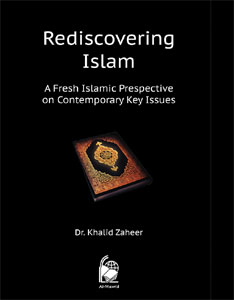
Rediscovering Islam: A Fresh Islamic Perspective on Contemporary Key Islam
Author: Dr Khalid Zaheer
Publisher: Al Mawrid Hind Foundation, New Delhi, India
Year of Publication: 2019
Pages: 172    Price Rs 300

Islam as a religion is misunderstood not only by the non-Muslims but even Muslims are not aware of its principles, priorities and projections. This misunderstanding is a result of disengagement and non-serious attitude towards understanding the holy scriptures of Islam. The sectarian Ulama have abused teachings of Islam, in order to tailor them to fit their exclusivist literal discourse. Meanwhile other theologians and doctors of divinity have made understanding these scriptures so difficult that a common man feels helpless and ill equipped to understand them, particularly the Holy Quran. In this manner the religious class maintains grip over the common masses who accept anything coming from them in the name of religion.

The current book under review is a rebellion against this status quo. The author of this book Dr Khalid Zaheer is an important contemporary scholar of Islam, who believes that Islam first needs to be understood then believed and later followed. “It is not only my right but a duty to state what is unique in the understanding of my faith. The only condition I must satisfy is that I should justify my understanding from the original sources of Islam.”

Offering key perspective towards understanding and application of Islam, given the changing context and era Dr Zaheer writes, “Faith never changes nor do its basic principles and expectations. However, the perspective with which faith is understood and applied changes. The glasses being used are the same, but the view they observe undergoes changes. The important thing is that while the view is different, the colour of the glasses should remain the same.”  This is quite a new manner of approaching the scriptures and encouraging Ijtihaad. Meanwhile all other sectarian Ulama believe in upholding the status quo and applying the same legal instructions that developed in a certain context that too going back to few centuries. They have failed to understand and evaluate the demands of changing times, so their interpretation of Islam has remained stagnant and fixated in time.

In the traditional approach as espoused by sectarian Ulama and taught in madrasas, questioning as a pedagogical practice is desisted. The students of madrasas develop a non-questioning attitude reinforced by blind following of religious injunctions (Taqlid). So, for these scholars questioning is something quite abhorrent, that leaves a number of doubts not only in the minds of common people, even the scholars are not immune from it. But Dr Zaheer believes in a different approach that he expresses as, “This approach also believes that Islam is a religion based on intellect and that faith encourages questions in pursuit of truth. This thought continues to develop and produce thinkers and reformers who firmly believe that Islam and the Quran deserve to be read and understood analytically as man continues to evolve his intellectual powers. I lay claim to be an ordinary follower of this religious-intellectual movement.”

Further reinforcing his definition and claim about the essence and productivity of this approach, he observes, “We seek guidance, ask questions, and make up our minds. This is very much a part of the exercise of acquiring faith. Genuinely questing and doubting one’s faith neither makes an individual faithless, nor is against the expectations that God has of believers.” (P-6-7) So questioning about various aspects of faith is encouraged. So this book is a result of same approach, “This book is based on some of the responses I had given to the questions I received in the last ten years or so.”

The book is divided into a number of chapters following a pattern of question and answers that haunt a believer and seeker of truth with a modern mind. The perennial question why people suffer, problem of evil, predestination and free will are answered lucidly. The new definition about Kaafir being a category of those who reject the truth instead of following the traditional Muslim, non-Muslim dichotomy is a worth read. The religious status of suicide bombing, Jihad, stoning those guilty of adultery is answered in a manner that destroys the arguments of the opponents.

The human relationships including dealing with non-Muslims, polytheists, atheists is understood in the new context. The new age issues including human rights of LGBTQ, Gender relations, Divorce, Illegitimate child and his/her status in Islam are engaged with progressively. A progressive interpretation of Islam is desisted by traditional Ulama who describe it as conspiracy against Islam. They decry that the new interpreters of Islam are twisting Quran and Hadith to suit their own agenda, but Dr Zaheer upholds the supremacy of Quran in these words, “We may disagree on what the text is saying, but we cannot overrule its verdict to suit the considerations of modern times once its meanings and implications are clear to us. Muslims believe that the Quranic text must be followed diligently because it is the divine message that has come to guide them; they cannot alter it or ignore it to suit the changing trends of their times. The fact that it is fully preserved rules out the possibility of human error creeping into it.” (P-79)

It is further being alleged about progressive scholars like Dr Zaheer that they are Munkir e Hadith (Those who reject sayings of Prophet Muhammad), though he believes, “But to ignore it completely will amount to ignoring an extremely valuable treasure of knowledge about the religious opinions and conduct of the most important man in the world of Islam.” (P-66) So believing and using these primary texts of Islam, Dr Zaheer engages with a number of issues across the spectrum that concern social, political, economic, educational, religious and new issues like Islamophobia. Aspects related to husband-wife relations, Taqlid, Bidah and innovations, mysticism and others are seriously answered by Dr Zaheer.

This book is written on the pattern of question and answers and a reader is free to follow any pattern while engaging with the text, as it doesn’t call for a systematic reading. Any chapter can be studied or any given question can be engaged with by the reader. This book is an important addition to understand a number of questions related to Islam as well as its position viz a viz the contemporary issues.
---

An occasional columnist for NewAgeIslam.com, M.H.A. Sikander is a writer-activist based in Srinagar, Kashmir.