Thursday, September 9, 2021

Should Muslims Follow Saudi-Wahhabi Version Of Islam In All Islamic Matters?

By Ghulam Ghaus, New Age Islam 9 September 2021 Are Saudis To Be Followed In Islamic Issues? Important Points: 1. Some lay Muslims argue that Muslims should follow the Saudis in Islamic matters 2. The Qur'an or Sunnah does not urge Muslims to imitate the inhabitants of Saudis 3. The Quran and Sunnah adequately provide guidance for Muslims 4. As far as the hadith ‘faith will shrink to Madinah’ is concerned, this is interpreted differently ----- (Photo Courtesy: News in Asia) ------ Some ordinary Muslims, usually job holders, who return from Saudi Arabia with Saudi views want us to look like Saudis, i.e., the Saudis do not wear caps, therefore we should cease wearing caps as well. Similarly, they argue that because the religion will shrink back to Saudi Arabia in the end days, Muslims should follow Saudis in order to succeed in Islamic matters. What does Islam have to say about this? Here's how to respond to this question: There is no evidence in the Qur'an or Sunnah that you should imitate the inhabitants of a country in order to fulfil your Islamic obligations. These are unfounded rumours that have no legal basis in the Quran. The Quran, on the other hand, proves that you must obey Allah and His Messenger (peace be upon him). As a result, rather than following the Saudis or anyone else, live according to the Qur'an and Sunnah: Allah says in the Quran: “And obey Allah and His Noble Messenger, and do not quarrel with one another; otherwise, you will lose courage and strength, and endure patiently; Allah is with those who patiently endure.” (8:46) It has been narrated by Abu Huraira that Allah's Messenger (peace be upon him) said, “All my followers will enter Paradise except those who refuse.” They said, “O Allah's Messenger (peace be upon him)! Who will refuse?” He said, “Whoever obeys me will enter Paradise, and whoever disobeys me is the one who refuses (to enter it).” [Sahih al-Bukhari 7280: Book 96, Hadith 12] Similarly, obedience to the Holy Prophet (peace and blessings of Allah be upon him) is commanded in dozens of the Quranic verses and Ahadith. As a result, obedience is not limited to any particular country or nation, but rather to Allah and His Messenger (peace be upon him). It's not just about Islamic headwear; there are several distinctions between us. Take a look at their attire and compare them to ours; their manner of life broadly differs from ours. The rumour that the Islamic faith will be restricted to Saudis is untrue. In this case, the following hadith presents a very different meaning. Hazrat Abu Hurairah [may Allah be pleased with him] reported God’s messenger as saying, “Faith will shrink back to Medina as a snake shrinks back to its hole.” [Bukhari and Muslim] The above hadith exclusively mentions Medina and not any other city in Saudi Arabia. As a result, in the end-times, all believers would seek refuge in Madinah in order to preserve their faith. Just as Islam spread from Madinah, it will return to it at the end of time. The hadith above specifically mentions Medina and not any other Saudi Arabian city. This is a prediction that all believers would seek refuge in Madinah in the end times in order to preserve their faith. In other words, Islam will return to Madinah at the end of time, just as it did when it first expanded. This does not, however, imply that Muslims in other nations must follow in the footsteps of Saudi Arabians in Islamic matters. This hadith was interpreted by some commentators as meaning that, as the Muslims had no power and state until they migrated to Madinah, Islam with its power and authority, extended out from Madinah and would fall back upon it at the end of time. This would also not call upon Muslims to imitate the Saudis in Islamic matters if we assume this interpretation to be correct. Muslims are guided adequately by the Quran and Sunnah; hence the Saudis in Islamic issues do not need to be imitated. ----- A regular Columnist with NewAgeIslam.com, Ghulam Ghaus Siddiqi Dehlvi is a Classical Islamic scholar and English-Arabic-Urdu Translator. URL: https://www.newageislam.com/islamic-q-a/saudi-wahhabi-islamic/d/125335 New Age Islam, Islam Online, Islamic Website, African Muslim News, Arab World News, South Asia News, Indian Muslim News, World Muslim News, Women in Islam, Islamic Feminism, Arab Women, Women In Arab, Islamophobia in America, Muslim Women in West, Islam Women and Feminism

Wednesday, September 8, 2021

Hazrat Makhdoom Ashraf Jahangir Semnani: The Founder of Ashrafi Sufi Order in India

By Ghulam Ghaus Siddiqi, New Age Islam 8 September 2021 A Brief Biography of Hazrat Makhdoom Ashraf Jahangir Semnani On The Occasion Of His 635th Death Anniversary [Urs] Main Points 1. Teachings of Hazrat Makhdoom illuminate human life and awaken hearts and minds to the light of Truth and guidance. 2. Sheikh Makhdoom Abdicated the Throne To Attain the Path of Marifa leading to God Almighty. 3. Until his death he kept reforming the people and established the Ashrafi Sufi Order, which has a large following in India. 4. In some of his letters Hazrat Makhdoom addressed to sultans and ulama and emphasised the significance of consultation as a necessary component of successful governance. 5. He urged them to promote social values and welfare of the civilians. ...... The annals of Islamic history are littered with references to countless events and persons that have bolstered the caravan of spiritual teachings. Such unique characters are honoured in Islamic history for their efforts in bringing about a momentous change in the dark world of hearts. Their activities and actions, which are chronicled in history, illuminate human life and awaken hearts and minds to the light of Truth and guidance. Hazrat Makhdoom Ashraf Jahangir Semnani is one of these spiritual figures (may Allah have mercy on him). Tomb of Hazrat Makhdoom Ashraf Jahangir Semnani ----- In Semnan, the historic capital of Iran, Hazrat Makhdoom Ashraf (1285–1386) was born. His father, Hazrat Sultan Ibrahim, was a spiritual dignitary as well as a just and compassionate ruler of Semnan. His forefathers are said to be Hazrat Imam Hussain's descendants, who descended from the Holy Prophet. He possessed incredible brilliance, resourcefulness, and knowledge. At the age of four and a half, he began his religious education and memorised the entire Quran in seven recitations by the age of seven, and excelled in the study of tafsir (Quranic interpretation), hadith, fiqah (Islamic jurisprudence), and other subjects. He had mastered various disciplines, including religion and philosophy, by the age of 14, and had grown into a highly educated and adept scholar. Hazrat Makhdoom Ashraf had amazed even the best intellectuals and theologians from as far as Baghdad with his astounding talent, which was noted in the famous Persian book Lataif-e-Ashrafi in the form of a couplet: Chuna Mashhoor Ghasht Az Darse Talim, ke Pas Ahle Funun Kardand Taslim (His popularity was so high during his early studies that knowledgeable folks recognised his abilities) When his father died, Hazrat Makhdoom Ashraf was only 15 years old, and he was inevitably crowned as his successor. In a ceremony held around 733 AH, he was proclaimed the sixth Sultan of Semnan. For twelve years, he ruled over Semnan with absolute sincerity and impartiality, and the people regarded him as a just and sincere king. During his reign, he became a salik (a spiritual path traveller) and a marifa seeker (inner knowledge gained through mystical means). He was fascinated to mysticism and was frequently seen in the company of holy persons, mystics and Sufis, the most famous of them being Ruknuddin Ala ul Daula Semnani. In a dream one night, Hazrat Khizr (peace be upon him) honoured him by appearing to him. He explained to Hazrat Makhdoom Ashraf the wazifa including Allah's names, which had to be performed without moving the tongue. He did this wazifa for two years until the great saint Hazrat Uwais Qarni arrived in his dream and offered him Uwaisi wazifas, which greatly assisted his spiritual development. For over three years, he was so engaged in the blessings and spiritual advancement he had gained from Hazrat Uwais Qarni’s teachings that he lost all desire to stay as Sultan of Semnan. With time, his longing for marifa got deeper, and at the age of 25, Hazrat Khizr (peace be upon him) reappeared in his dream on the 27th of Ramadan. He was asked to abdicate the kingdom and travel to India, where he would find his Pir (spiritual mentor), Hazrat Sheikh Ala ul-Haq Pandwi, a prominent Chishtiya saint and a disciple of Hazrat Sheikh Akhi Sirajuddin. He told his mother about his dream when he awoke, and she gave him permission to carry out his divinely ordained task. When his mother found out, she stated that previous to his birth, Khwaja Ahmad Yasavi had foreseen the birth of a great saint who would illuminate, inspire, and guide those who were engulfed in darkness. With her approval, he made arrangements to travel to India, naming his younger brother Mohammad as his successor. Despite having a lavish lifestyle, a wealth of luxuries, glory, and dignity, he preferred the spiritual path leading to Marifat of God Almighty. The real believer’s selflessness is such that thrones, wealth, glory, power, and materiality have no effect on him. Hazrat Makhdoom had it all, from wealth to luxury, but because he was cognizant of the truth, he was not impressed, and instead, he continued to pursue spiritual grandeur with zeal. Thousands of troops greeted Hazrat Makhdoom Ashraf as he left his homeland. Hazrat Mir Sayyid Ali Hamadani became his associate around this time. They went to all of the major Sufi shrines in Iran, Iraq, Syria and Turkey. After a long journey of visiting the shrines, Hazrat Makhdoom Ashraf arrived in Maner, Bihar, where a famous saint named Hazrat Makhdoom Sharfuddin Ahmed Yahya Maneri had died the day before and was awaiting funeral prayer. Prior to his death, Sheikh Maneri requested that his Janazah (funeral) prayer be performed by someone who has relinquished his throne, is a Hassani and Hussaini (a descendant of both Imam Hassan and Imam Hussain, the Prophet's grandsons, may Allah be pleased with them) and a Hafiz who knows each of the seven types of Qirat. Hazrat Makhdoom Ashraf was already aware of this through Kashf (revelation). The disciples of Hazrat Makhdoom Sharfuddin eagerly awaited his arrival, and despite the fact that Hazrat Makhdoom Ashraf refused to offer the burial prayer out of humility, he carried out Sheikh Maneri’s wishes. Hazrat Makhdoom Ashraf set out from Maner for Pandua Sharif, where Hazrat Alaul Haq Pandwi, who would later become his spiritual master, awaited his arrival with bated breath. In Pandwa Sharif, India, he reached the summit of spirituality and attained spiritual khilafat from his spiritual mentor Hazrat Alaul Haq Pandwi. Until his death on the 28th of Muharram, 808, Hazrat Makhdoom Ashraf continued to spiritually reform the people and had established the Ashrafi Sufi Order, which has a large following in India. Every year, between the 26th and 29th of Muharram, His Urs (death anniversary) is commemorated. His shrine in Kichhauchha Sharif is known for being particularly helpfl in assisting persons who have been afflicted by Jinn, and his name is still invoked in this regard. His Works and Teachings Basharatu'l-Ikhwan, Fawa'idu'l-Ashraf, Basharatu'z-Zakirin, and Tanbihu'l-Ikhwan are among his famous writings that teach people the necessity of grasping the meanings and essence of technical words of Sufism. His Miratu'l-Haqai'q and Kanzud-Daqai'q were written for individuals who were more accomplished in Sufism. These writings, as well as his Maktubat-i Ashrafi letters, contribute to a better understanding of Wahdat al-Wujud. Some of Hazrat Makhdoom Ashraf's letters were addressed to sultans and ulama. He emphasised the significance of consultation with various leaders as a necessary component of successful governance. He urged them to promote social values and the welfare of the civilians. Although he placed a strong focus on enforcement of the Sharia, the fundamental idea was to ensure that common people were treated fairly. --- A regular Columnist with NewAgeIslam.com, Ghulam Ghaus Siddiqi Dehlvi is a Classical Islamic scholar and English-Arabic-Urdu Translator. URL: New Age Islam, Islam Online, Islamic Website, African Muslim News, Arab World News, South Asia News, Indian Muslim News, World Muslim News, Women in Islam, Islamic Feminism, Arab Women, Women In Arab, Islamophobia in America, Muslim Women in West, Islam Women and Feminism

Success Is a Divine Blessing – Realise it In the Inclusiveness of Humanity and A Holistic Approach to Life

By Arman Neyazi, New Age Islam 8 September 2021 Allah, The Most Compassionate, Prophet Muhammad Pbuh Or Spiritual Ethics Of Islam Do Not Ask The Believer To Abandon The Luxuries Of Life But To Earn It In The Righteous And Lawful Manner Main Points: 1. Being a successful person is being a spiritual person. 2. The success that we see from our open eyes is nothing but a momentary rejoicement of a temporary abode, called the world. 3. The wrongs done by the people in quest of establishing supremacy is in abundance but the door to the path of forgiveness is never closed by the Most Gracious, Allah. 4. The allurement of exhibiting success has snatched the joy of real success that fills the heart with happiness and satisfaction. ------ Being a successful person is being a spiritual person. The success that we see from our open eyes is nothing but a momentary celebration of a temporary abode, called the world. Achievements in life are a must but these achievements should come treading the path of spiritual essence towards the society. Most importantly one must remember, the fastest one goes up, the fastest he comes down as Isaac Newton’s theory of gravitation says: "What goes up must come down": Every action has an equal, opposite reaction. - Isaac Newton Real success is not something that needs to be exhibited to the world but it is that the world remembers much after one is gone. It is wrong to take success equivalent to having palatial buildings with servants standing in attention to attend to the orders of Sirs, Madams, Babas and Babies. It is a misnomer. Had the scientists invented ‘a heart-peeping machine’ the pain, sorrow and grief hidden in the background of success would have come out and the world would have accepted that real success is not that eyes could see. But success is what hearts can feel. The allurement of exhibiting success has snatched the joy of real success that fills the hearts with divine happiness and satisfaction. Real success creates relationships of love and compassion in society, a relationship that is called humanity. 'The success that is achieved abusing the rights of fellow human beings is not a success’. It is a success where the heart is afraid of losing and the mind is waiting for some horrible news, all the time. It is a well-known fact that we all know and that, nothing comes without a cost. So, as big a success as big a cost is there to be paid. Study the stories of the people who are sharing spaces in the newspapers every day and you will know that there are a minimal number of them who have achieved real success in life. From politics to business to sports, everywhere most people have bought pain for themselves and their loved ones in the form of success. The Penny Brohn UK ''Bristol Whole Life Approach Model ª showing the holistic approach of the LWC at Penny Brohn UK. LWC, Living Well Course. ------ Success – A Holistic Approach to Life In quest of success, many of us lose people who loved and cared for us. In the race of materialistic supremacy (success) we forget the meaning of success. We lose the inclusive and transitive aspect of humanitarian ethics that guide our lives to divine attributes of success. A holistic approach to life is a success that is achieved on the righteous path guided by Allah the Most Compassionate and Prophet Muhammad Pbuh. Allah the Creator of the universe is more concerned with our successful life than we are. The universe and the world have abundant articles and things that are created for the betterment of humanity. Allah the Most Compassionate says in the Holy Quran: “It is He who created all that is on the earth for you…” (Al-Baqarah: 29) - Sahih International The holistic success is achieved in abundance without paying any price for it. Success lies in everything we do if it is performed in a divine way that carries the virtues of a spiritual soul. Success is not what one has achieved. Success is the number of people being a part of it. Success is not self-happiness. Success is celebrated with the people not alone. When people take themselves as a part of your success, you are successful. Success is what benefits us and others here and hereafter. Allah, The All-Knowers says: Seek through the wealth that Allah has given you to make your abode in the Hereafter, and also do not forget your share from this world, and do good to others as Allah has done good to you; (Al-Qasas: 77) Bringing happiness on other’s faces is commanded by Allah, the Creator of the Universe because here lies people’s real happiness of achievement. Earning wealth is not against the ethics of Islam except that wealth should be earned lawfully. According to a tradition, Prophet Muhammad (SAW) once said about Abdur Rahman bin ‘Awf, “what a remarkable achievement: a righteous man blessed with lawful wealth.” Therefore, it is said that the accumulation of wealth in an unlawful manner is not a thing to rejoice as a success rather it is a failure in disguise. In another tradition, Prophet Muhammad Pbuh says, ‘I was shown the Paradise, behold, most of the people inside are the poor.’ According to this tradition, one may not be counted as a successful person here rather his real success lies in being bestowed a place in heaven that is a permanent abode. The Quranic Verses on Secret of Success ...Indeed, Allah will not change the condition of a people until they change what is in themselves.... - (Ar-Rad: 11) Sahih International Those are upon [right] guidance from their Lord, and it is those who are the successful.” (Al-Baqarah: 4-5) “…Allah gives provision to whom He wills without account.” (Al-Baqarah: 212) O children of Adam, take your adornment at every masjid, and eat and drink, but be not excessive. Indeed, He likes not those who commit excess. Say, "Who has forbidden the adornment of Allah which He has produced for His servants and the good [lawful] things of provision?" - (Al-A'raf: 31-32) But among them is he who says, "Our Lord, give us in this world [that which is] good and in the Hereafter [that which is] good and protect us from the punishment of the Fire."(Al-Baqarah: 201) Allah, the Most Compassionate, Prophet Muhammad Pbuh or spiritual ethics of Islam do not ask the believer to abandon the luxuries of life. They just ask people to be righteous, benevolent and compassionate. Islamic ethics ask people to celebrate success with the society as one’s success is a success only if the society takes it as its success. We have to understand that this is a temporary abode. We are a traveller in the world. We have to live like a stranger. We owe nothing in this world. We are here to face trials and tribulations of this temporary abode and come out with flying colours to be rewarded with success in our hereafter life. The wrongs done by the people in quest of establishing supremacy is in abundance but the door to the path of forgiveness is never closed by the Most Gracious, Allah. People must not lose heart and hope as hopelessness is the devils most desirable weapon against the human being. Hopelessness deviates one from the path of righteous deeds. The need of the hour is to introduce human beings to real success. Our success lies in fighting for the smiling faces of the innocent souls crying for justice for the injustices they have been subjected to. Following Quranic verses command people not to be despair and lose hope as Allah, the Most Compassionate is the greatest hope of the crying humanity. Consider the following Ayat and decide your future course of action in making your life a success. O MY servants who have transgressed against themselves (by sinning), do not despair of the mercy of Allah. Indeed, Allah forgives all sins. Indeed, it is He who is the Forgiving, the Merciful. (Al-Zumar: 53) Wealth and children are [but] adornment of the worldly life. But the enduring good deeds are better to your Lord for reward and better for (one's) hope. (Al-Kahf - 46) Can a person always have whatever he desires? (An-Najm: 24) And Allah Knows the Best. ---- Arman Neyazi is a columnist with NewAgeIslam.com. URL: https://www.newageislam.com/spiritual-meditations/divine-blessing-success-holistic/d/125327 New Age Islam, Islam Online, Islamic Website, African Muslim News, Arab World News, South Asia News, Indian Muslim News, World Muslim News, Women in Islam, Islamic Feminism, Arab Women, Women In Arab, Islamophobia in America, Muslim Women in West, Islam Women and Feminism

Tuesday, September 7, 2021

Why ‘Progressive’ Muslims are wrong in Condemning Naseeruddin Shah’s Anti-Taliban Video

By Arshad Alam, New Age Islam 7 September 2021 Instead Of Pointing Out Faults, They Need To Stand With Shah At This Important Juncture. Main Points: 1. Naseeruddin Shah’s video made its impact as it riled both the Hindu right wing and a section of Muslims, including some who would like to see themselves as progressive Muslims. 2. Muslim organizations’ refusal to condemn the Taliban is downright worrying but what is perhaps more worrisome is the refusal of the progressive Muslims to see it clearly. 3. Naseeruddin Shah might have linked Islam with medievalism but why are we so indignant about it? Isn’t our theology and jurisprudence still medieval? 4. These Muslim progressives should strengthen the likes of Shah rather than shielding Muslim conservatism. ---- In the wake of the return of Taliban and the celebratory posturing of a few Indian Muslims, Naseeruddin Shah posted an indignant video in which he condemned those who were happy to see the coming of the Islamists. Informed by what the Taliban had done to the country when they first took power, Shah termed them as bestial and barbaric. He questioned whether Muslims should be looking forward to modernity or should pine for the return of this medieval mindset. The video was short, sharp and crisp. The fact that it made its impact is clear from the fact that it riled both the Hindu right wing and the Muslim sympathizers of the Taliban. Shah made a distinction between Indian and other varieties of Islam and argued that Indian Islam was tolerant and appreciative of pluralism. He implied that those celebrating the Taliban have no understanding of this difference. The Hindu right wing seized upon this distinction to point out how Indian Islam was implicated in the killing of ‘millions of Hindus’, ‘destruction of their cultural heritage’ and a ‘veritable erasure of their identity’. However, while pointing this out, they singularly fail to tell us how despite the long years of such ‘barbaric rule’, the Hindus still constitute an overrwlming majority of 85 per cent in this country. The whole point of the Hindu right wing discourse is to argue that Islam is essentially the same everywhere. That it is a religion of violence and that at its core is the idea of Islamic supremacy. This view is completely a-historical because Islam has always fused with local cultures and flavours and therefore one cannot talk of Islam in the singular. But then the Hindu right wing has an agenda to fulfil and painting Islam as an unchanging unitarian barbaric cult helps them immensely. Naseeruddin Shah ----- What are the Muslim objections to Shah’s message? And within this category are not just those Muslims who celebrated the return of the Taliban but also those who present themselves as modernist and progressive voices within the community. There are two sets of related objections that they have raised. They have argued that Shah seems to be implying that all Muslims in India celebrated the return of the Taliban which is factually incorrect. They point out that only a few Indian Muslims welcomed their return and because of this to paint the entire Muslim community with the same brush is patently wrong. There might be some merit in this argument but then what is the barometer of gauging that the celebrations came from a small section of Muslims? There is no way of knowing it as there isn’t any survey conducted to the effect. The only way perhaps to understand it is to see what position hegemonic Muslim organizations took on the return of the Taliban. As I wrote earlier, not just that there is no outright condemnation from the sundry bodies of Deobandis, Barelwis and the Ahle Hadees, but that in the past (and some in the present) they have always been close to the vision of what the Taliban is proclaiming. Who can deny that an average Barelwi, despite his differences with the Deobandi, does not endorse the vision of the Talibani Sharia or that of the Islamic state? These organization have millions of followers. Their refusal to condemn the Taliban is downright worrying but what is perhaps more worrisome is the refusal of the progressive Muslims to see it clearly. The second objection to Shah’s videos is that he urged Indian Muslims to choose between the mediaeval Islam of violence and a modern, forward-looking Islam. The objection here is that Shah painted the entire mediaeval Islamic history as bestial. It is argued that not only was he factually wrong but that in saying that Indian Islam was different, he was only lending credence to the right-wing claim that it became so because of the civilizing effect of Hinduism. I do not think that it was Shah’s intention to state that Muslim history in only about ‘barbarism’. We know that Islam made significant contribution to India’s history, chief among them was its idea of equality. But then the problem which some progressive Muslims (most of them upper caste Ashraf Muslims, who take pride in having a foreign lineage) have is that they do not want to accept that Hinduism also had some positive effect on Islam, may be in terms of a certain moderation in thought and acceptance of pluralism. How can Islam, which calls itself the perfect religion, accept anything from an inferior polytheistic religion? Shah might have also linked Islam with mediaevalism because all our theology and jurisprudence is still mediaeval with hardly any change in them at all. This being the situation, shouldn’t one choose between mediaevalism and modernism? Indian Muslims are in a unique position because their country is still secular and democratic, however truncated it might have become. It was this uniqueness that Shah was trying to underline. Within this context, if Muslim organizations do not condemn the Taliban, it can only mean that secularism, democracy and the constitution are empty words for Muslims which only have value in relation to protecting their sectarian interests. I am sure that some progressive Muslims can see through this charade and yet refuse to be alarmed by this tendency. Partly the ‘progressive’ Muslim is doing this because they want to ‘save’ Muslims from the Hindu Right's relentless Islamophobia. After all the coming of the Taliban was welcomed not just by a section of Muslims, but also by the right-wing Hindus who used the opportunity to showcase what ‘true’ Islam was all about. But this urge to save Muslims has only had one effect which is to close all conservations around the issues of religious conservatism and possible reform. In the name of fighting Islamophobia, why is the progressive Muslim aligning with the orthodoxy? If one takes the position that this is not the right time for Shah to voice his concerns; that it will be appropriated by right wing Hindus, then perhaps the likes of Shah should never speak up. These Muslim progressives are adding nothing original to the debate. They are simply aping the stale leftist rhetoric which because of their supreme ignorance of Islam and Muslims never engaged in such questions. In a complex world, there is never a right context and in any given context what one writes or says can be used for some other purpose. The context of the ascendance of Hindu right wing should not stop Muslims from condemning the Taliban. Neither should it stop them from calling out those in India who support the Taliban. This is time when we need to stand up for courageous voices like those of Shah. Any failure to do so would only strengthen the religious orthodoxy within the Muslim community. ----- Arshad Alam is a columnist with NewAgeIslam.com URL: https://www.newageislam.com/islamic-society/progressive-muslims-naseeruddin-anti-taliban/d/125323 New Age Islam, Islam Online, Islamic Website, African Muslim News, Arab World News, South Asia News, Indian Muslim News, World Muslim News, Women in Islam, Islamic Feminism, Arab Women, Women In Arab, Islamophobia in America, Muslim Women in West, Islam Women and Feminism

Monday, September 6, 2021

Debunking Slanders about the Prophet's Marriage to Hazrat Safiyah and Her Iddah Period

By Ghulam Ghaus Siddiqi, New Age Islam 6 September 2021 The Prophet’s Marriage With Hazrat Safiyah: Was She Forced Into Marriage, And That Too Before The Completion Of Her Iddah Period? Main Points 1. Hazrat Safiyah chose to marry the Prophet [peace be upon him] rather than being forced to. 2. The relevant rule in the case of Hazrat Safiyah was not of ‘Iddah (waiting period), but that of Istibra' [the freeing of the womb] which could be obtained with a single menstrual cycle 3. A widow must wait for four months and ten days before she can remarry, or until her child is born if she is pregnant at the time. 4. A divorcee must wait three menstrual periods [about three months] before she can remarry or until the birth of her child if she is pregnant at the time 5. A captive lady must wait for one menstrual cycle or until the birth of her child if she is pregnant at the time 6. A captive woman’s marriage gets annulled unless she and her husband are taken as captives together ----- Some people in our culture have a predisposition when it comes to evaluating others. They neglect the truth and tightly hold the falsehood. They don't think twice about saying exaggerated and incorrect things to the praise of the people they care about. On the contrary, when they despise someone, they propagate untrue rumours to condemn him in public without investigating the facts. They don't want to know the truth. Their hatred has grown to the point where its intoxication precludes them from comprehending the truth. In short, the biggest extremists among such hateful people are those who unjustifiably accuse the purest personality of the world and the most moral and honourable Prophet, Hazrat Muhammad Mustafa (peace be upon him). It would have been nice if these bigots had learned the truth before spreading their lies to the whole public. In order to realise the very actuality, let us try to counter an objection made by nasty people about the marriage of Prophet Muhammad (peace be upon him) with Hazrat Safiyya bint [the daughter of] Huyay of the Nadir Jewish tribe. This objection is based on two points: 1. The wedding took place after the conquest of Khaibar, during which Safiyya's husband and other family members were killed, while her father had already been killed a few years before. They question how Safiyya could willingly marry someone who is responsible for her relatives’ death. 2. The Prophet (peace be upon him) wedded her well before the Qur'anic waiting period for a woman whose husband dies (i.e. four months and ten days). [The Qur’an 2:234] This circumstance is used to claim that the Prophet (peace be upon him) broke the law he himself established. Expressing the above two points of the objection, they do the propaganda that it is difficult to understand how the Prophet's coercion of Hazrat Safiyyah into marriage for freedom could be considered ethical or humanitarian. [Ma’azallah, may Allah protect us from such erroneous thoughts] Hazrat Safiyya chose to marry the Prophet and was not forced to do so: Proofs are listed below They have speculated that she was forced into marriage since the Prophet (peace be upon him) took her as a slave, freed her, and then married her. To put it another way, it is stated that she had no choice but to marry the Prophet [peace be upon him] in order to live as a free person. This is completely wrong because of the reports and evidence preserving the details of the Prophet's (peace be upon him) offer to her after he had taken her from Dihya. The report of Ja‘far b. Mahmud is the most detailed in this regard: When Hazrat Safiyya approached the Prophet (peace be upon him), he said to her, “Among the Jews, your father did not stop in his animosity against me till Allah annihilated him.” She said, ‘O Allah's Messenger! Indeed Allah says, “No one will bear another's burden.” So the Prophet (peace be upon him) told her, “Make your choice; if you choose Islam, I will choose you for myself; if you choose Judaism, I will set you free and send you back to your people.” She said, ‘O Allah's Messenger, indeed I yearned for Islam and testified for you even before you extended this offer to me when I came to you. I don't have a Jewish guardian; neither a father nor a brother, and I prefer Islam to unbelief. I value Allah and His Messenger more than freedom returning me to my people.” [Ibn Sa‘d, Muhammad, Tabaqat al-Kubra, Vol.8, 97.] The above report is also substantiated and reinforced by the reports recorded by the scholars of Hadith, for example, by Ibn Hibban [in his Sahih], Abd al-Razzaq al-San’ani [in his Musannaf], Ahmad b. Hanbal [in his Musnad]. They have reported through an authentic chain of narration that Hajjab b. ‘Ilat informed the Prophet’s uncle al-Abbas about the campaign of Khaibar as follows: “The Messenger of Allah (peace be upon him) had chosen Safiyya, Huyay's daughter, for himself and had given her the option of gaining her freedom and marrying him or joining in her family; she had chosen for him to free her and to be his wife.” [Musannaf of Abd al-Razzaq, Hadith 9771/ Musnad Ahmad b. Hanbal, Hadith 12409, Sahih Ibn Hibban, vol.10, p.392] Both of the above accounts reveal that Safiyya was not forced to marry the Prophet (peace be upon him) in order to be freed from slavery; rather, she was offered the opportunity to join her Jewish relatives, but she gladly preferred the Prophet's (peace be upon him) company overall else. The Prophet (peace be upon him) did not disobey the waiting period requirement mentioned in the Quran The nasty people argue that, while the Quran prescribes a waiting period of four months and ten days for women whose husbands die, they are only allowed to remarry after this period has passed [The Quran, 2: 234-235], we see that the Prophet (peace be upon him) married Hazrat Safiyya soon after her husband died, implying that the Quranic rule of the waiting period has been broken in her case. The waiting-time restriction inherent in the Quran [2: 234-235], however, does not apply in situations like Safiyah’s. The reason for this is that after a conquest, Hazrat Safiyya was taken as a slave, and her marriage was pronounced null and void because her husband had not come. Even if her husband Kinana had escaped death and captivity, Islamic law would have ruled his marriage to Safiyya null and void. [see Al-Jassas, Abu Bakr, Ahkam al-Qur’an, Vol.5, 328-331/ al-Sarakhsi, Muhammad b. Ahmad, al-Mabsut, Vol.5, 50-53/ ‘Uthmani, Zafar Ahmad, I‘la’ al-Sunan, Vol.11, 107-109] As a result, the relevant rule in the case of Hazrat Safiyya was not of ‘Iddah (waiting period), but that of Istibra'. Istibra' refers to ensuring that a woman's womb is empty. This assurance could even be obtained with a single menstrual cycle, as happened in the instance of Hazrat Safiyya, according to credible records. According to a narration of Anas bin Malik, “the Prophet (peace be upon him) chose her [Hazrat Safiyya] for himself and started off with her, and when we arrived at a place called Sadd al-Sahba', Safiya became lawful (i.e. free of menses) and the Messenger of Allah married her.” [Sahih Bukhari Hadith 2893/3974/2235/ 4211/, Sahih Muslim Hadith 1365/, Fath al-Bari Vol.7, 480] According to another narration of Anas bin Malik, “The Messenger of Allah (peace be upon him) avoided (intimacy with) Safiyya until she was free from her monthly cycle”. [Al-Musannaf Abd al-Razzaq, Hadith 13109/ Tabarani 69/24/Musnad al-Harith, 502/Fathul Bari li Ibn Hajar al-Asqalani, vol.4, p.494/ Sunan al-Kubra lil Baihaqi, Hadith 15688/ Bughyah al-Bahith ‘an Zawa’id Musnad al-Harith by al-Haithmi, Hadith 502/1005] According to these Ahadith, the Prophet (peace be upon him) did not have intercourse with Hazrat Safiyyah prior to her 'iddah period. Because Hazrat Safia was taken as a captive lady, her 'iddah was limited to one menstrual cycle. This was not an uncommon occurrence. On another occasion, the Prophet (peace be upon him) made the same judgment in a similar situation. Regarding the slave captives taken at Awtas, Hazrat Abu Sa‘id al-Khudri traced the following statement to Prophet (peace be upon him): “There shall be no intercourse with a pregnant woman until she gives birth to her child or with a non-pregnant woman till she menstruates once.” [Sunan Abu Dawud, Hadith 2157] It has been narrated by Hazrat Ruwaifi bin Thabit al-Ansari: Should I tell you what I heard the Messenger of Allah (peace be upon him) say on the Day of Hunain? “It is not permissible for a man who believes in Allah and the Last Day to have sexual relations with a captive lady until she is free from her menstrual period. [Sunan Abu Dawud, Hadith 2158] Imam Muslim (1365) narrated from Anas (may Allah be pleased with him) (in which it is said that) the Prophet [peace be upon him] entrusted her [Hazrat Safiyah] to Umm-e-Sulaim so that she might embellish her and prepare her (for marriage) with him. He (the narrator) said: He had been under the impression that he had said that so that she might spend her period of 'Iddah in her (Umm-e- Sulaim's) house. According to Imam Nawawi, here 'Iddah’ refers to ‘Istibra' [i.e. the freeing of the womb from pregnancy] because she was imprisoned in battle. Istibra 'was obligatory in this case. During this istibra the Prophet kept her in the house of Umm-e-Sulaim. When the istibra was completed, Umm-e-Sulaim prepared her for the Prophet (peace be upon him), that is, she adorned her and prepared her for marriage. [The commentary on Sahih Muslim, 9/222] Al-Jassas (d. 370/980) writes on this subject: “There is no distinction among jurists from all the regions that a captive woman must be free of one menstrual course” (before establishing conjugal relations).” Captives’ marriages are invalidated the moment they are taken captive. Hazrat Safiyah’s (may Allah be pleased with her) former husband had waged war against the Prophet (peace be upon him) and killed one of his companions; he was taken into prison, and thus his marriage was annulled. If his former wife later desired to marry, she would not follow the widow’s waiting period (four months and ten days), but rather that of a captive woman because her marriage was annulled and she is neither a widow nor a divorcee. The normal Iddah period for a divorced woman or a widow does not apply here since Hazrat Safiyah’s (may Allah be pleased with her) position was unique, as she was a prisoner of war and her husband was still alive at the time of her capture and therefore her marriage was automatically annulled and only one menstrual cycle was enough for the Prophet [peace be upon him] to marry her and be intimate with her. The following summary provides extremely clear information regarding the waiting period mandated for widows, divorcees, and captive women: A widow must wait four months and ten days before she can remarry, or until her child is born if she is pregnant at the time. A divorcee must wait three menstrual periods [about three months] before she can remarry or until the birth of her child if she is pregnant at the time A captive lady must wait for one menstrual cycle or until the birth of her child if she is pregnant at the time A captive woman’s marriage gets annulled unless she and her husband are taken as captives together --- A regular Columnist with NewAgeIslam.com, Ghulam Ghaus Siddiqi Dehlvi is a Classical Islamic scholar and English-Arabic-Urdu Translator. URL: https://www.newageislam.com/islamic-personalities/hazrat-safiyah-iddah-prophet/d/125320 New Age Islam, Islam Online, Islamic Website, African Muslim News, Arab World News, South Asia News, Indian Muslim News, World Muslim News, Women in Islam, Islamic Feminism, Arab Women, Women In Arab, Islamophobia in America, Muslim Women in West, Islam Women and Feminism

No Religion Differs on Religious Essence of Other Religions - Human Beings Do

By Arman Neyazi, New Age Islam 6 September 2021 We Are Muslims, Hindus, Christians, Jews, Zoroastrians, Sikhs, Jains And Baha'is Etc. Only By Our Own Social Admission, Religion Does Not Discriminate Among Us Main Points: 1. Allah says in the Holy Quran, Prophet Muhammad (SAW) has been sent as a messenger of peace for the entire universe, not for any particular community. 2. There is no religious discrimination among the people as far as the world religions are concerned. 3. Unless the discriminatory policies of world politics are not taken care of, there has to be social and political chaos. ------ We are Muslims, Hindus, Christians, Jews, Zoroastrians, Sikhs, Jains and Baha'is etc. only by our social admission. From Judaism, first of all, the Abrahamic religions to Islam the last, Allah the Most Gracious talks of inclusivity and pluralistic ethos when He says ‘the worlds’ in various verses of the Holy Quran. Allah says in the Holy Quran about the Seal of All the Prophets, Prophet Muhammad (SAW) that he has been sent as a messenger of peace for the entire universe, not for any particular community. Consider this verse: "And we have sent thee not but as a blessing (mercy) for the entire universe (for all peoples)" (21:108) In one of the verses of the Holy Quran Allah says, ‘All praise is due to God alone, the Sustainer of all the worlds, - (Al-Fateha - 2)’. The expression, ‘All the worlds’ is an expression describing the pluralistic and inclusivist essence of Islam. It shows Allah, the Most Gracious is not for the followers of Islam only but the entire universe. The whole of humanity is His Creation, hence, He is God of the universe. Other religions also do not discriminate among people, consider the following verse and Shloka from the Holy Bible and Git: ...through whom he also created the worlds. (Heb. 1:2) I (Krishna) am the same to all beings; to Me there is none hateful or dear, but those who worship Me with devotion abide in Me and I in them. - Gita 9:29. There is no religious discrimination among the people as far as the world religions are concerned. From the oldest of all the religions, Judaism to the newest Islam, all the scriptures value human beings as one. None of these has ever talked of Jews, Christians, Hindus and Muslims. It is we the humankind that have created our identity with the name of religion and the nations, we belong to. No problems if the human being is divided into nations and communities as the Holy Quran says, ' "O mankind, indeed We have created you from male and female and made you peoples and tribes that you may know one another - (Al-Hujurat - 13). There are different religions and religious beliefs but humane ethics remain the same. Traits of peace love, compassion, brotherhood, and divine inclusiveness do not differ. Divinity and its divine attributes of humankind, no matter which nation or community they belong to are the same. No one among us, humankind, differs on the virtues of spiritual enlightenment of peace and inclusiveness we all have. Our religiosity has changed our way of worship, our cultural and religious teachings but it has not affected our inner inclusive sense of belonging. We differ in religious appearance and religious norms but we do not differ in our social responsibilities. We accept and follow the norms of social life. We have formed various social organisations that have formulated human rights for all humanity not for political-religious faith or ideology or the nation. At heart, the world acknowledges human differences but does not discriminate against human beings is one. We acknowledge our social needs are the same as we all are born through the same process of birth. It is not that the Muslims, the Christians, the Jews and all other are born through different processes. We acknowledge that our physical needs are the same as our physical build is the same. We all have the same nervous system consisting of the same system, be it our hearts, our kidneys or any of our other physical attributes. We have the same hearts and minds, it’s built wise but we all always think differently and feel differently from each other. The reason is clear. Allah has blessed us all with wisdom, intellect and logic and has blessed us with the power of thinking and feeling differently on every matter, religion, religious teachings and social norms. Allah says in the Holy Quran: ‘Those who listen to the Word, and follow the best (meaning) in it: (Az-Zumar - 18)’ That was a nation that has passed on. It will have [the consequence of] what it earned, and you will have what you have earned. And you will not be asked about what they used to do. - (Al Baqarah: 134) The above-mentioned verses say, those people who listen to the world means intelligent people, and make their own decisions and the blessed ones. The second verse says that no one of us the humankind will be answerable to what other’s do. We all have been blessed with our intellect to use it by selecting the righteous path. We will stand answerable to our deeds, good or bad. Allah the Most Gracious has created the world and created human beings as His vicegerent and distributed them in nations and communities to test them for their beliefs and use of intellect in making the world an abode of peace and inclusiveness, like these, are the traits Allah loves the most. Following Quranic and Biblical verses, as well as Shlokas from the Hindu religious epics, demonstrate human beings uniformity in everything except the religious beliefs. Quranic Verses on Humane Virtues of all Humankind And who believe in what has been revealed to you, [O Muhammad], and what was revealed before you ... - (Al-Baqarah - 4) But it is not except a reminder to the worlds. - (Al-Qalam - 52) O people of Islam, "You are the best people ever raised for the good of mankind because you have been raised to serve others; you enjoin what is good and forbid evil and believe in Allah." (3:111) "And do not forget to do good to one another." (2:238) And will aid you with worldly goods and children, and will bestow upon you gardens, and bestow upon you running waters - (Nuh (Noah):12) "O ye People of the Book! Believe in what We have (now) revealed, confirming what was (already) with you, " (An-Nisa':47) "The same religion He has established for you as that which He enjoined on Noah - the which We have sent by inspiration to thee - and that which We enjoined on Abraham, Moses, and Jesus: Namely, that you should remain steadfast in religion, and make no divisions therein: - (sh-Shuraa - 13) .... To each among you, we have prescribed a law and an open way. If Allah had so willed, He would have made you a single people, but (His plan is) to test you in what He has given you: so strive as in a race in all virtues. ... - (Al-Ma'idah - 48) Hindu Epics Depicting the Essence of Inclusiveness of Human Beings This Being (neuter) entered all beings, he became the overlord of all beings. That is the Atman (Soul, Self) within and without – yea, within and without! — Maitri Upanishad 5.2, Even those who, endowed with faith are devoted to other gods, they worship Me alone, O Kaunteya, in an indirect manner. - Gita 9:23. Whichever manifestation (of the Divine) any devotee desires to worship with faith – that faith I make unshakeable and firm. - Gita 7:21. Neither here [in this world] nor there [in the next], O Arjuna, is there destruction for the one [who meditates on the inconceivable Absolute]. For verily, no one who does good, my son, ever comes to grief. - Gita 6:40 Biblical Verses Advocating Inclusiveness of Humanity He upholds all things by the word of his power. (Hebrews 1:3) For we were all baptized by one Spirit into one body--whether Jews or Greeks, slave or free--and we were all given the one Spirit to drink. - 1 Corinthians 12 “Whoever sheds the blood of man, by man shall his blood be shed, for God made man in his own image. - Genesis 9:6 For we brought nothing into the world, and we can take nothing out of it. 1 Timothy 6:7-8 I made the earth and created man on it; it was my hands that stretched out the heavens, and I commanded all their host. - Isaiah 45:12 Islam, Christianity, Hinduism and Judaism with all other faiths and religions stand on the same pedestal as far as human beings having the same spiritual and social essence that teaches exclusivism in every human being is concerned. The lessons, therefore, taught by the world religions is not that of discrimination based on religion or communities. It is we that have created a huge religious, social and spiritual gulf among ourselves. It is all against the teachings of the religions we follow and boast of it being the best. Following are the Quotes of the Scholars Depicting Oneness of Human Beings “All differences in this world are of degree, and not of a kind because oneness is the secret of everything.” ― Swami Vivekananda “We all are so deeply interconnected; we have no option but to love all.” ― Amit Ray, Yoga and Vipassana: An Integrated Life Style “Technology is destructive only in the hands of people who do not realize that they are the same process as the universe. ” ― Alan Watts “We never stopped being each other.” ― Alicen Grey “I'm Different, I Don't See Any Difference-in-Differences.” ― Syed Sharukh Unless the discriminatory policies of world politics are taken care of, there will be social and political chaos. The powers that be must take cognizance of the pain and grief spread all over the world and come forward with the teachings of inclusiveness and pluralism that Islam, Christianity, Judaism and Hinduism have taught. And Allah Knows the Best. ----- Arman Neyazi is a columnist with NewAgeIslam.com. URL: https://www.newageislam.com/interfaith-dialogue/religious-essence-christianity-hinduism-judaism/d/125319 New Age Islam, Islam Online, Islamic Website, African Muslim News, Arab World News, South Asia News, Indian Muslim News, World Muslim News, Women in Islam, Islamic Feminism, Arab Women, Women In Arab, Islamophobia in America, Muslim Women in West, Islam Women and Feminism

Saturday, September 4, 2021

Monotheistic Religions - Missing Hospitality and Graciousness Are the Reason for Social Downfall of Humanity

By Arman Neyazi, New Age Islam 4 September 2021 Monotheistic Religions Have Hospitality, Graciousness, Kindness, Compassion and Inclusiveness with Other Positivities of Life Rooted In Their Ethics Main Points: 1. Let the world adopt humility, compassion, love and brotherhood so that it brings back our inborn humane qualities. 2. Hospitality and graciousness are the divine qualities that awaken the spiritual trait that the human being has inborn in his persona. 3. Humanity has stopped practising the lessons of spirituality that introduce the society with Sufis, Saints, Rishis and Munis hospitable and generous acts. 4. 'Hospitality' had a special place in Prophet Muhammad Pbuh’s life. --- Hospitality, understood as both an act and an attitude to life, demands a transformation of the self towards goodness and grace — to how God wants us to be with one another. Image: Rembrandt van Rijn, “Abraham Welcoming the Three Angels” (Photo by Heritage Arts / Heritage Images via Getty Images). (Adh-Dhariyat: 24-27) ----- Monotheistic religions have hospitality, graciousness, kindness, compassion and inclusiveness along with other positivities of life rooted in their ethics. These are divine qualities that awaken the spiritual trait that the human being has inborn in his persona. Even the animals have some of these qualities in them. Animals also exhibit love and compassion in their wildlife, for the breed they belong to. The pet animals are pets because of their inborn qualities of faithfulness and compassion for their masters. Allah the Most Compassionate created the universe with innumerable signs that teach the human being the lesson of compassion and inclusiveness. Among all these humane characteristics of human beings 'hospitality' had a special place in Prophet Muhammad Pbuh’s life. The holy Prophet is reported to have said, “There is no good in the one who is not hospitable”. According to this tradition, hospitality is one humane quality that Prophet Muhammad Pbuh takes supreme. Even before the Prophet Muhammad Pbuh was bestowed prophethood, he was hospitable to strangers, the guests and the destitute. His inborn humane qualities of compassion, honesty, hospitality and generosity were witnessed by his family and society. Allah is All Generous. He dislikes meanness and miserliness. The Holy Quran and the Holy Bible have various verses describing the practice of hospitality and generosity that are handsomely rewarded by the Most Generous Allah on the Day of Judgment. Verses from the Holy Quran on the Divine Aspects of Hospitality and Graciousness And they give food in spite of love for it to the needy, the orphan, and the captive, - (Al-'Insan: 8) And urges not the feeding of the needy. - (Al-Ma'un:3) Righteousness is not in turning your faces towards the east or the west. Rather, the righteous are those who believe in Allah, the Last Day, the angels, the Books, and the prophets; who give charity out of their cherished wealth to relatives, orphans, the poor, ˹needy˺ travellers, beggars, and for freeing captives; - (Surah Al-Baqarah - 177) They ask you as to what they should spend. Say: “Whatever good you spend should be for parents, kinsmen, orphans, the needy and the wayfarer; and whatever good you do, Allah is all-aware of it.” - (Surah Al-Baqarah - 215) So fear Allah as much as you are able and listen and obey and spend (in the way of Allah); it is better for your selves. And whoever is protected from the stinginess of his soul - it is those who will be the successful. - (At-Taghabun: 16) And He also says: O you who believe! Give of the good things which you have [honourably] earned, and of the fruits of the earth which we have produced for you…And whatever you spend in charity or devotion, be sure Allah knows it all. - (Al-Baqarah: 267–270) “Has the story reached you, of the honoured guests [three angels; Jibril (Gabriel) along with another two] of Ibrahim (Abraham)? When they came into him and said: `Salam (peace be upon you),’ He answered: `Salam (peace be upon you),’ and said: `You are a people unknown to me.’ Then he turned to his household and brought out a roasted calf [as the property of Ibrahim (Abraham) was mainly cows]. And placed it before them, (saying): `Will you not eat?” (Adh-Dhariyat: 24-27) Is it not to share your food with the hungry and to provide the poor wanderer with shelter— when you see the naked, to clothe them, and not to turn away from your own flesh and blood? - Isaiah 58:7 Verses from Bible on the Divinity of Hospitality Above all, love each other deeply, because love covers a multitude of sins. Offer hospitality to one another without grumbling. - 1 Peter 4:8-9 He was faithful to the one who appointed him, just as Moses was faithful in all God’s house. - Hebrews 3:2 ...and is well known for her good deeds, such as bringing up children, showing hospitality, washing the feet of the Lord’s people, helping those in trouble and devoting herself to all kinds of good deeds. - 1 Timothy 5:10 Rather, he must be hospitable, one who loves what is good, who is self-controlled, upright, holy and disciplined. - Titus 1:8 At that hour of the night, the jailer took them and washed their wounds; then immediately he and all his household were baptized. The jailer brought them into his house and set a meal before them; he was filled with joy because he had come to believe in God—he and his whole household. - Acts 16:33-34 When a foreigner resides among you in your land, do not mistreat them. The foreigner residing among you must be treated as your native-born. Love them as yourself, for you were foreigners in Egypt. I am the LORD your God. - Leviticus 19:33-34 Prophetic Tradition of Hospitality and Graciousness “Islam began in strangeness and it will return to strangeness just as it began, so blessed are the strangers.” - Prophet Muhammad Pbuh “Indeed whoever believes that Allah is All-Generous, Who provides for His creation and rewards those who are hospitable towards their guests, should look after his guest.” Prophet Muhammad Pbuh “Be in the world as though you were a stranger or a wayfarer” (122-3, Hadith 40). Abu Shuraih reported: The Messenger of Allah, Pbuh said, “Whoever believes in Allah and the Last Day, let him honour his guest and recompense him.” They said, “O Messenger of Allah, what is his recompense?” The Prophet said, “It is for a day and a night, as good hospitality is for three days and after that it is charity.” - Saheeh Al-Bukhari 5673, Saheeh Muslim 3255 Prophet Muhammad (SAW) reportedly said, "If you stay with some people and they entertain you as they should for a guest, accept is; but if they do not do then you should take from them the right of the guest, which they ought to give." Sahih al-Bukhari 6137 and Sahih Muslim 1727(Book 18, Hadith 4289) A Companion asked the Prophet (SAW), "O Messenger of Allah! If I visit a man, and he does not entertain me or show hospitality, and later this man visits me, should I entertain him or treat him in the way he treated me?" The Prophet (SAW) replied, "Entertain him." - At-Tirmidhi Narrated Abu Huraira(R): The worst food is that of a wedding banquet to which only the rich are invited while the poor are not invited. And he who refuses an invitation (to a banquet) disobeys Allah and His Apostle. Sahih al-Bukhari and Sunan Ibn Majah “A man visited a brother in another town. Allah (SWT) sent an angel to lie in wait for him along his way. When he came upon the angel, he asked him: ‘Where are you going?’ He answered: ‘I am going to visit a brother of mine in this town?’ The angel asked further: ‘Is there any favour that you want to get from him?’ The man said: ‘No, it is only that I love him for Allah’s (SWT) sake.’ The angel then said: ‘I am a messenger of Allah to you (to tell you) that Allah (SWT) loves you, as you love your brother for His sake.” (Muslim) “There is no person like a person who takes the reigns and fights for the sake of Allah, avoiding people’s evil, and a person among his sheep in the outskirts giving meal to his guest, honouring his right.” [Ahmad & al-Haakim] Above mentioned verses from the Holy Bible and Holy Quran and the Prophetic traditions pinpoint the necessity of looking after the strangers (travellers and poor) akin to our family members. In the present context of a war-ridden world and innumerable refugees all over the world, it can be said that human beings hospitable behaviour and compassion for them will bring the world again to its true origin of compassion and brotherhood. Given the monotheistic religions’ inclusive regard for hospitality and graciousness, it can be said that the chaos created by war, terrorism, sectarianism and regionalism is the result of us forgetting our duty of being hospitable and compassionate towards the poor creations of Allah, the Most Gracious. Hospitality a Duty towards Others The above-mentioned verses from the Holy Quran and the Holy Bible are calling men, the followers and the believers, to join hands together and be hospitable and generous to all the strangers and those who have come from other countries (refugees), keeping the Bible verse in view, ‘When a foreigner resides among you in your land, do not mistreat them. (Leviticus 19:33). And the Holy Quran says, ‘And whoever is protected from the stinginess of his soul - it is those who will be the successful. - (At-Taghabun: 16)’ Like many other negativities that have crept in in our society, hospitality has also been forgotten as a sign of a cultured society. Humanity has stopped practising the lessons of spirituality that introduce the society with Sufis Saints Rishis and Munis hospitable and generous acts. We have forgotten the relevance of Kabir Das’ following Doha which is a Dua to understand and practice. साईं इतना दीजिये, जा मे कुटुम समाय । मैं भी भूखा न रहूँ, साधु ना भूखा जाय ॥ The stories of hospitality and generosity of our Sufis, Saints Rishis and Munis are adoring the literary books and have become a lesson best forgotten. The world is bereft of the heartfelt Dua and blessings that a hungry gives after the hospitality he receives. These acts of hospitality were a real shield for our society and the world at large. Righteous people among us feel something missing from the world environment and that is the blessings of the poor, the needy and the destitute. The world today is not giving water to the thirsty and bread to the hungry. The world is sending the widows and orphans of the war-torn countries empty-handed. And so many people are killed either due to terrorism, militancy, war or hunger. We cannot expect God to be kind to us if we are being unkind to His creation, in need. Consider the following verses from the Holy Bible: “You have given no water to the weary to drink, and you have withheld bread from the hungry” (Job 22:8) “You have sent widows away empty-handed, and the arms of the orphans you have crushed” (Job 22:9) Le the world adopt humility, compassion, love and brotherhood so that it brings back our inborn humane qualities and we could transform our lives in a beautiful gift that Allah the Most Compassionate and Gracious has bestowed upon us. And Allah Knows the Best. --- Arman Neyazi is a columnist with NewAgeIslam.com. URL: https://www.newageislam.com/interfaith-dialogue/monotheistic-religion-hospitality-humanity/d/125314 New Age Islam, Islam Online, Islamic Website, African Muslim News, Arab World News, South Asia News, Indian Muslim News, World Muslim News, Women in Islam, Islamic Feminism, Arab Women, Women In Arab, Islamophobia in America, Muslim Women in West, Islam Women and Feminism

Friday, September 3, 2021

While The Quran Cannot Be Changed, There Is Scope for Improvement in the Sharia Law, And That through Various Instruments like Maqasid-e-Sharia and Maslaha Available in Islam: Sultan Shahin Tells The Print

 Not Just Under Taliban, Data Shows Sharia Law Hardly Ever Lets Freedom Flourish

Main Points:

1.    The Sharia law is based on the interpretation of the Quran which came about 150-200 years after the Prophet died.

2.    Sharia is derived from the Quran and the Hadiths — the statements, actions and teachings of Prophet Muhammad.

3.    Across different Islamic countries, the percentage of laws based on Sharia varies widely.

1.    Ulema, who should have been the biggest defenders and propagators of human rights, are its biggest violators across the world, says Sultan Shahin, founder-editor, New Age Islam.

-----
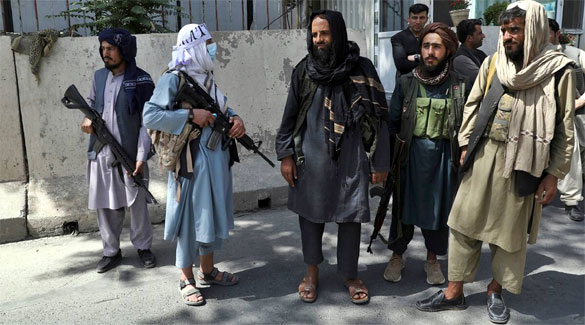
 

 Taliban fighters stand guard at the main gate leading to the Afghan presidential palace, in Kabul, Afghanistan, Monday, Aug. 16, 2021. (AP)

------

--------------------------------------------------------------------------------------

Meanwhile, Shahin said while the Quran cannot be changed, there is scope for improvement in the Sharia law, and that through various instruments available in Islam, Muslim scholars can ameliorate the situation. “If they believe that the objective of Sharia is to bring harmony and restricting human rights is causing disharmony, they might even change the law,” he said.

“Of course, that will only happen if Ulema (Muslim scholars) decide to follow Islamic rules about human rights. At the moment, Ulema, who should have been the biggest defenders and propagators of human rights, are its biggest violators across the world,” he opined.

--------------------------------------------------------------------------------------

 

By Nikhil Rampal

3 September 2021

Images of Afghans rushing to the Kabul airport to try and get out of the country as the Taliban recaptured power last month have been etched into the collective memory of the world. The Taliban intend to make an Islamic emirate out of the strife-torn country, where Sharia will be the law of the land. And dozens of incidents in the last month alone have shown how individual freedoms are being hampered under the religious law, despite the Taliban projecting themselves as less hardline than before.

Sharia is derived from the Quran and the Hadiths — the statements, actions and teachings of Prophet Muhammad. In most Islamic countries, Sharia finds its place in personal and legal matters. Lexico, a website powered by Oxford University Press dictionaries, says Sharia “prescrib(es) both religious and secular duties and sometimes retributive penalties for law-breaking. It has generally been supplemented by legislation adapted to the conditions of the day, though the manner in which it should be applied in modern states is a subject of dispute between Muslim traditionalists and reformists”.

However, critics like author Taslima Nasreen have said the Afghans, especially women, are actually trying to flee Sharia law, and the personal freedoms it restricts.

ThePrint dives deep into data from reputed international researchers to see whether Sharia and personal freedoms are as mutually exclusive as Nasreen and other critics make them out to be.

Sharia and Personal Freedoms

Across different Islamic countries, the percentage of laws based on Sharia varies widely, making it difficult to gauge just how much the religious law impacts their current rules and regulations.

But for the purpose of this report, two data sets have been used — one, a 2013 survey by US-based think-tank Pew Research Center, which asked respondents about their approval for Sharia to be the official law of their country; and two, the 2016 edition of the annual Human Freedom Index released by US-based think-tank CATO Institute, in collaboration with Canada’s Fraser Institute. The 2016 edition is the earliest available for comparison.

The Human Freedom Index is based on 34 personal freedom indicators and 42 economic freedom indicators. The personal freedom index broadly measures two categories — legal protection and security (which includes civil justice, security of people from terror and women’s safety), and specific personal freedoms (which includes freedoms pertaining to movement, religion, civil society, expression and information and identity and relationships).

ThePrint’s analysis of 23 Muslim-majority countries on these indices shows that personal freedom and preference for Sharia are moderately correlated with each other, with a negative relationship (coefficient of correlation = -0.57). This means that countries where Sharia has a strong approval are also the ones where individual freedoms are limited.

Bosnia and Herzegovina and Albania, the two Muslim-majority countries in eastern Europe, where individuals were freer than the global average score, had the lowest approval for Sharia as the law of the land — less than 8 per cent.

But in the rest of the Muslim-majority countries, people enjoyed less freedom than the global average. Iraq, where the personal freedom score was the lowest in the Human Freedom Index, had 91 per cent respondents favouring Sharia as their country’s law in the Pew survey.

Egypt, Bangladesh and Pakistan are other prominent examples of people wanting Sharia law, and possessing low levels of freedom.
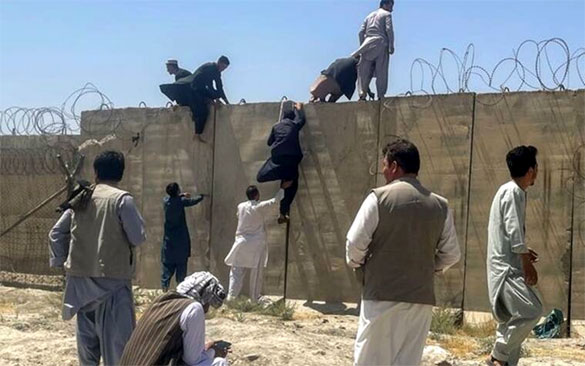
 

Men try to get inside Hamid Karzai International Airport in Kabul, Afghanistan August 16, 2021. (Reuters)

------

Democracy Essential for Freedom

The next question to be studied is just why Islamic countries rate poorly on personal freedoms — the key lies in the absence of democracy in many of them.

According to a study by Mustafa Akyol, senior fellow at the CATO Institute in Washington D.C. and expert on Islam and modernity, there exists a strong positive correlation between democracy and human freedom. The more successful a democracy is, the more individual freedom it offers.

The 2020 edition of the Human Freedom Index report also shows that there is a high degree of positive correlation between human freedoms and the level of democracy, and not just in Islamic countries. Authoritarian regimes like China, Venezuela and North Korea have the lowest human freedom scores.

The Economist magazine’s Intelligence Unit also publishes an annual Democracy Index, which ranks countries based on the quality of democracy — full democracies, flawed democracies, hybrid regimes and authoritarian regimes. In the last four years, of the 50-55 authoritarian regimes in the index, more than half are from Muslim-majority countries. In the 2020 rankings, about 13 Muslim-majority nations featured in the bottom 20 of the Democracy Index.

--------------------------------------------------------------------------------------

Also Read: Islamic Laws, Fatwas and Fiqhi Decisions Drawn from the Sharia for Dealing with Current Scenarios: Immutable or Flexible?

--------------------------------------------------------------------------------------

Islam and Democracy

According to a paper by the United States Institute of Peace, an American think-tank working in conflict management, the reasons for the high level of authoritarianism in Islamic countries are political, economic, cultural and historical, more than religious.

The paper states that a vast majority of Muslim thinkers are opposed to democracy because it gives more value to the law created by humans over the law laid down by Allah. But there also exists a school of thought that is in favour of new ideas, practices and institutions. “(This school) stresses the need for continuity of basic Islamic traditions but believes that Islamic law (Sharia) is historically conditioned and needs to be reinterpreted in light of the changing needs of modern society,” the paper states.

According to Hilal Ahmed, a scholar of political Islam and associate professor at the Centre for the Study of Developing Societies (CSDS), “Islam and Sharia and even the notion of democracy are highly diversified concepts. This heterogeneity should be recognised as a precondition to talk about the complex ways in which these ideas are used in the Muslim world”.

“One may identify two observable trends. First, the authoritarian regimes such as Saudi Arabia evoke Sharia to legitimise their rule in the name of Islam. These regimes suppress dissent to establish Sharia. They always take refuge in the conventional binary between Sharia and democracy,” Ahmed told ThePrint.

Sultan Shahin, editor of New Age Islam, a progressive website working on rethinking Islamic postulates, said problems exist in the Sharia too. “With the concept of ‘Shura’ (consultation) placed in the Quran, Islamic countries should not have dynasties and monarchies at all, but that’s not the case. The Sharia law is based on the interpretation of the Quran which came about 150-200 years after the Prophet died,” he told ThePrint.

The Arab Spring revolutions of the last decade had produced hope that the Islamic world would turn towards democracy, but it has proven to be a false hope. Asked how democracy, which is essential to personal freedoms, can take hold in the Islamic world, Ahmed said: “There is a serious lack of intellectual work as well as political debates on this question in these countries. In my view, there is a need to evolve a democratic system suitable for the adherents of Islam, instead of evoking outdated intellectual claims such as the Islamic notion of democracy.”

Meanwhile, Shahin said while the Quran cannot be changed, there is scope for improvement in the Sharia law, and that through various instruments available in Islam, Muslim scholars can ameliorate the situation. “If they believe that the objective of Sharia is to bring harmony and restricting human rights is causing disharmony, they might even change the law,” he said.

“Of course, that will only happen if Ulema (Muslim scholars) decide to follow Islamic rules about human rights. At the moment, Ulema, who should have been the biggest defenders and propagators of human rights, are its biggest violators across the world,” he opined.

(Edited by Shreyas Sharma)

(Courtesy: The Print, URL: https://theprint.in/world/not-just-under-taliban-data-shows-sharia-law-hardly-ever-lets-freedom-flourish/727065/)

URL:  https://www.newageislam.com/islamic-sharia-laws/maqasid-e-sharia-maslaha-quran/d/125307


New Age Islam, Islam Online, Islamic Website, African Muslim News, Arab World News, South Asia News, Indian Muslim News, World Muslim News, Women in Islam, Islamic Feminism, Arab Women, Women In Arab, Islamophobia in America, Muslim Women in West, Islam Women and Feminism