Friday, April 2, 2021

Muslims Must Condemn the Vandalism of Hefazat e Islam


By Arshad Alam, New Age Islam

2 April, 2021

The visit of Prime Minister Narendra Modi to Bangladesh saw protests on an unprecedented scale. Organised by the Hefazat e Islam, the protests not just saw wanton attacks on government property but also targeted violence on the religious symbols of minority Hindus, wherein several temples were vandalised. It appears that the Indian PM has become hugely unpopular in Bangladesh because of his government’s domestic policy which has unfairly targeted the Muslim minority. Since Bangladesh is still a democracy, people have the freedom to protest against whoever they wish to. However, if under the pretext of such protests, the country’s own religious minority comes under threat, then it becomes a matter of grave concern. And that’s why the activities of Hefazat, especially its targeting of temples, must be condemned by all Muslims. There are other peaceful ways of registering protests and in not opting for those, Hefazat was sending a clear signal: that its protests were not just against Modi but also an exhibition of hatred against an already beleaguered Hindu minority.

Part of the problem behind such show of violence was the high handedness of the police in handling the protests. The police bullet felled at least four of such protestors which seems to have enraged the Hefazat further. It cannot be said enough that the police should have handled the situation better and should have shown restraint. But then, increasingly in South Asia, governments are becoming more and more authoritarian and this gets reflected through the actions of the police. Sheikh Hasina, having obliterated all forms of opposition, seems to think that she can get away with anything and it is this hubris which seems to have precipitated the crises in Bangladesh.



The Hefazat has grown on the ruins of the Jamat e Islami in Bangladesh. Historically, the Jamat opposed the liberation of Bangladesh from Pakistan and hence came to considered as an enemy of the state by the current government. Several of its leaders have been hanged and hundreds are behind bars, effectively making the organisation dysfunctional. Sheikh Hasina has also insured that the ‘secular’ opposition is completely wiped out. She has decimated her political opponents, many of whom are in jail on trumped up charges. She has not even spared critical voices within the civil society with the net affect that she has been ruling the country with virtually no opposition and hence no accountability. In such a scenario, it is completely understandable that the opposition space will be taken up by religious parties. There was a time when the Jamat e Islamifilled up that space but then Sheikh Hasina, in order to undercut it, started to flirt with various other more radical Islamist organisations. The Hefazat e Islam was born out of such a desire to limit the appeal of the Jamat e Islami. However, in the process of containing one abomination, her government gave birth to an even more virulent version of it.

Hefazat derives its power from thousands of Islamic seminaries spread across the country, called the Qawmi madrasas, which are different from the government-controlled Aliya madrasas. Primarily Deobandi in orientation, the Hefazat leadership does not shy away from politically using their students in their demonstrations. Totalling nearly 1.4 million students spread across nearly 14000 madrasas, they provide a ready mass of volunteers and protestors whenever required by the leadership. The Hefazatstarted by demanding that the government recognise the degrees issued by the Qawmi madrasas. It raised its voice against the ‘intermixing of genders’ and removal of the statue of justice which it argued was against Islamic precepts. But it really came to notoriety when its members started killing secular and atheist bloggers in that country. A series of brutally orchestrated public murders committed by Hefazat was primarily designed to announce their arrival as a new force and to terrorise those who had a different idea of Bangladesh. Against the idea of a secular republic, the Hefazat was now proclaiming an Islamic republic of Bangladesh and ingratiating themselves as its custodian. Anyone who had a different trajectory in mind for the country was an enemy of Islam whose killing became legitimate.

Hefazat wants to create a Bangladesh in its own image and that’s why its position will always be one of Islamic supremacy. One of its important agenda is the removal of sculptors from all public spaces which is specifically problematic for Bangladeshi Hindu as they fear that Hefazat would want to banish their temples once they become more powerful. However, Hefazat has assured the Hindus that they do not have to worry as an ‘Islamic government’ will protect them. Despite such assurances, the recent attacks on Hindu temples have shown that this minority fear is not completely unfounded. These attacks should not just be seen as a reaction to the Prime Minister’s visit but at the same time as an ideological and physical attack against the practitioners of ‘idolatry.’ Moreover, it is not just a question of temples. Sculptors dot the landscape of Bangladesh as they are part of historical and cultural complex. Many of these sculptors represent Hindu personalities and ideas which are crucial in representing the pluralistic ethos of the country. A theological position against statues and images necessarily militates against this diversity. No wonder the Hindu minority is feeling increasingly out of place in their own country.

Instead of tackling this problem of Islamist radicalism head-on, the government not just dithered but also succumbed to many of the demands made by Hefazat. In order to be seen as ‘Islamic’, government spokesmen even justified the killing of bloggers. Rather than condemning the Hefazat outrightly, they spoke against secular bloggers arguing that in a Muslim country, they should exercise restraint. This not only emboldened the Hefazat but also elevated it as the sole protector of Islam in Bangladesh. It is the current government’s own soft-peddling of the issue which has made Hefazat into what it is today.

Indian Muslims who are happy with this ‘show of solidarity’ need to understand that such mindless vandalism does not serve their cause. As minorities, Indian Muslims should condemn the violence against Hindus in Bangladesh rather than gloat about the power of Islamic brotherhood.

---------  

Arshad Alam is a columnist with NewAgeIslam.com

URL:  https://www.newageislam.com/radical-islamism-jihad/arshad-alam-new-age-islam/muslims-condemn-vandalism-hefazat-e-islam/d/124638


New Age IslamIslam OnlineIslamic WebsiteAfrican Muslim NewsArab World NewsSouth Asia NewsIndian Muslim NewsWorld Muslim NewsWomen in IslamIslamic FeminismArab WomenWomen In ArabIslamophobia in AmericaMuslim Women in WestIslam Women and Feminism

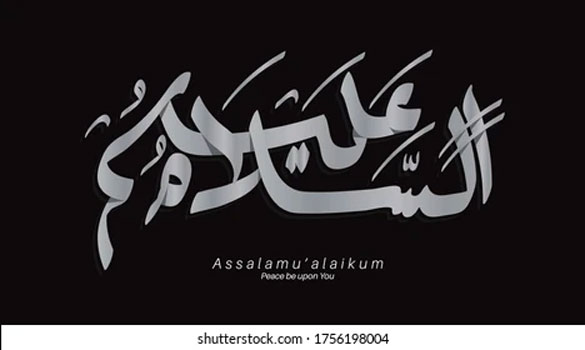
The Greeting – As Salaamu Alaykum, Peace Be Upon You: Is Altruistic Salaamism Since It Implies ‘I am Responsible for Your Safety’

 By Rashid Samnakay, New Age Islam

2 April 2021


Once it was common practice in industry to “insert” ten to fifteen percent extra in the budget allocation for “Safety”, to cover for potential expenses for accident events. Modern practice has brought a paradigm shift in this mindset. Instead it allows for Safe working training, equipment purchase, progressive Safety improvements measures and thorough investigations of “events” to determine initial causes of accident to eliminate recurrence.

The emphases on working Safely, not only to prevent injury to oneself – Selfishness, which is essential but to inculcate a culture where Safety essentially becomes every individuals responsibility to maintain the entire workplace a Safe environment. Altruism, that includes Self Protection as well. A duty/ Brief placed vicariously on every individual for others Safety, a daares-salaam.

Somewhat similar duty is placed on Muslims' in their greeting, particularly amongst themselves and among Arabic speaking people, is “Salaam-” for short; not dissimilar to greetings in other languages and cultures with unsaid but implied good wishes, more than those expressed in words such as “Good morning” for example. Implied therein as; I hope your day begins beautifully, as a friend I wish you have a lovely day etc.

The above has its equivalent in Arabic too, but more commonly among Muslims one uses the Quranic Arabic salutation As-Salaamu Alaykum. Peace be upon you. Even if the encounter happens to be among non-Arab Muslims and non-Muslims alike. There are these unsaid but implied connotations:

1- In my presence you are SAFE,

2-I am your FRIEND....and

3-A safe ENVIRONMENT for us both.

Salaamun; Safe from all dangers; is just one of a derivative of the root SLM. It has others as well. In Urdu Lughtul Quran by G M Parwez lists eight significant meanings with extensive elaborations, among them are derivatives such as Saleem, to be purified from all Faults and blemishes; Sallama, to be protected from danger and so on.

In the Book Quran, this greetings of Peace is repeated numerous times, such as in 7-46, where a long exchange takes place between the rightly guided people in heavenly environment and the misguided:

7-46…They call out to the owners of the garden/paradise salaamun alaikum - Peace be upon you;

and hoping to get in there.

But more significantly, a Muslim who is charged with the duty of maintaining this world as an Abode of Peace and declares it in the Salutation to others: As-Salaamun alaikum and then negates it with death and destruction is doubly sinful, if ever there is such a thing.

10-25, And God invites to the abode of PEACE – Daares-salaam – those guided to the straight path.

The overall message from such references appear to be, that when faced with an environment of hostility, the primary thought in a true Believers' mind is to endeavour for peace, not at any cost to oneself , as instructed in the Book but on terms honourable and balanced with equity and generosity– adal bil qist and bil ehsaan.

Not to exceed the limits in all situations is a commandment of the Creator, as transgression would be selfishness affecting mankind's peaceful environment. The unity of His creation, the mankind, is referred here in 10-19. All previous Messengers propagated this message, a message of monotheism in modern language and usage. Alas! All such messages have been assimilated into Religionism/Theism!

In advantageous conditions achieved after the hostilities had stopped, mankind guided on the straight path, is asked to go that one step further towards behaviour that may be termed as altruistic, to maintain salaam.

Is not Islam, (which is just an Arabic word as given in Arabic Quran), named so for the above system – a code of behaviour - an Altruism with some what broader meaning of the term, difficult for a lay person to express in a compound sentence?

Why can't the linguists, scholars and doctors coin a non- Arabic word or a phrase at least in English for Islam so that one can use it in un-apologetic manner as a universal code for mankind and not as an insular Religion. Anyone then, not following the universally accepted moral and ethical code to the letter could be easily dubbed as an infidel, a universal criminal; a non-Muslim and or Muslim alike! Then one can boldly say that the likes of Alexander of Macedonia and Mahmood of Ghazni were in this reality all great Plunderers, hence infidels.

Recently an article by Kareem Aga Khan came close to rescue in this respect of naming Islam. He opined that instead of being a “monotheism” it is a “monorealism”. Everything in it relates to the reality of Human activity and its reaction to create heaven or hell on Earth by its actions. An environment of tranquility and harmony for all God's creatures can therefore only come from this monorealism's Altruism.

The constant pleading to the Ulamau' of Religion, to whom the Deen is but a Religion with capital R; to address the issue of misguided jihad and rightful struggle as given in Quran and its true import for humanity, is not only like asking the mischievous cunning Cheshire cat of Alice in Wonderland for guidance but also ask it to guard the basket of sardines, where the natural instinct of this class of creature is clearly known to want to devour them. As for guidance the creature is devoid of reality to do so as it is just a fictional animal!

For definition of Ulamau' it is best to refer to 35-27, 28. to realise how far removed is this class of people from reality and knowledge base, let alone the ability to delve into the scripture beyond its esoteric, regurgitated and literal meanings.

It is long pass the time to gather the A'lim, linguists, historians, archaeologists, astronomers, geographers, economists etc. to come on the table. A concerted effort is required urgently, like that of attending to present day Climate Change crisis and save the planet. Muslim world in particular is truly in dire crisis.

It is best to end this sad story on a supplication, that Muslims always resort to when the going gets tough. But an example of enlightened modern thinking, a gentleman's submission of his extended good wishes to his friend is quoted here:

"May as-salam be upon you. May your day, mine and everyone else's, be Blessed with Altruism, beauty, caring, contentment, courage, decency, forgiveness, gratitude, happiness, honesty, integrity, joy, justice, kindness, knowledge, love, meaning, mercy, peace, presence, respect, responsibility, temperance, understanding and wisdom. Amen!” ….Phew! and alphabetically arranged too!!

If only Altruism is adopted universally with the monorealism of Islam.


 URL:  https://www.newageislam.com/islamic-society/rashid-samnakay-new-age-islam/-greeting-salaamu-alaykum-peace-be-upon-altruistic-salaamism-since-it-implies-i-am-responsible-safety/d/124639


New Age IslamIslam OnlineIslamic WebsiteAfrican Muslim NewsArab World NewsSouth Asia NewsIndian Muslim NewsWorld Muslim NewsWomen in IslamIslamic FeminismArab WomenWomen In ArabIslamophobia in AmericaMuslim Women in WestIslam Women and Feminism

Thursday, April 1, 2021

What Is The Meaning of The Quranic Verse 2:191 ‘Fitna Is Worse Than Killing’?


By Ghulam Ghaus Siddiqi, New Age Islam

1 April 2021

Before understanding the Quranic verse 2:191 which reads “Fitna is worse than killing”, we should know the lexical meaning as well as the variations of the usage of ‘Fitna’ in the Quran.

Lexical Meanings of Fitna

The Arabic word ‘fitna’ (also spelled ‘fitnah’, pl. fitan), as used in Classical Arabic as well as in Modern Standard Arabic, has several meanings and connotations, such as, ‘trial’, ‘test’, ‘affliction’, ‘temptation’, ‘sedition’, ‘civil strife’, ‘conflict’, ‘distress’, ‘an act of oppression perpetrated by the powerful against the weak’, ‘rebellion against a ruler’, ‘an act of falling prey to the ‘whispers’ of Satan and falling into sin’, and ‘attractiveness or captivation’.

Meanings of Fitna in the Quran

Variations of the meaning of ‘Fitna’ can be found throughout the Quran. I have collected several verses which have used the word ‘fitna’ to indicate several meanings, such as the verses 2:102, 2:191, 2:193, 2:217, 3:7, 4:91, 4:101, 5:41, 5:71, 6:23, 7:27, 7:155, 8:25, 8:28, 8:39, 8:73, 9:47, 9:48, 9:49, 10:85, 17:60, 21:35,  21:111, 22:11, 22:53, 24:63, 25:20, 29:10, 33:17, 37:63, 39:49, 51:14,  54:27, 60:5, 64:15 and 74:31. For the ease of the readers, I am quoting below some verses in full.  

Allah Almighty says, “And Know that your wealth and your children are a test (fitna) and that with Allah is an immense reward.” (The Quran- 8:28). Here Fitna means ‘test’.

“Your wealth and your children are just a test (fitna); and with Allah is a tremendous reward.” (64:15)

“They said, “We have relied only upon Allah; Our Lord! Do not make us [objects of] trial (fitna) for the unjust people.” (The Quran-10:85). Here Fitna means ‘trial’.   

“Every soul will taste death. And We test you with evil and with good as a trial (Fitna); and to Us you will be returned.” (The Quran- 21:35). Here Fitna refers to ‘trial’.

“O our Lord! Do not put us into the trial [fitna] of the disbelievers, and forgive us, O our Lord! Indeed You only are the Most Honourable, the Wise.” (The Quran- 60:5). Here Fitna refers to ‘trial’.

“….and the two (angels, Harut and Marut) never taught a thing to anyone until they used to say, “We are only a trial (fitna), therefore do not lose your faith…” (The Quran- 2:102). Here too, Fitna refers to ‘trial’.

“And fight them until no mischief (fitna) remains, and only Allah is worshipped; then if they desist, do not harm them, except the unjust.” (2:193). Here Fitna may denote several implications,  ‘mischief’, ‘injustice’, ‘oppression’, ‘religious persecution’, or ‘any act preventing a believer from believing in the Deen [roughly translated as Religion] of Allah’.

“O children of Adam, let not Satan tempt (the verb of ‘fitna’ used here as ‘yaftinann’-a-kumfitne me daalna, or tempting to commit what is disliked by God Almighty) you as he removed your parents from Paradise, stripping them of their clothing to show them their private parts. Indeed, he sees you, he and his tribe, from where you do not see them. Indeed, We have made the devils allies to those who do not believe.” (The Quran, 7:27)

“[And will be told], "Taste your torment (fitna). This is that for which you were impatient.” (51:14). Here fitna refers to ‘torment’.

Meaning of The Quranic Verse 2:191 ‘Fitna Is Worse Than Killing’

And fight them wherever you confront them [during combat] and expel them from wherever they have expelled you, and [though killing is bad] fitna is worse than killing. And do not fight them at al-Masjid al-Haram until they fight you there. But if they fight you, then kill them. Such is the reward of the disbelievers. (2:191)

I have translated the word ‘waqtulu’ in the above verse as ‘fight’. Here the imperative sentence ‘waqtuluhum’ literally means ‘kill them’. This meaning has been creating confusion among the common readers who do not bother about going into exegesis or correct interpretation befitting of the cause of revelation (shan-e-nuzul) or historical background. Since this divine command is not about the offensive attack and that this was specific for the state of war, as proven by the details narrated in the classical and popular books of Tafsir with the proofs of Ahadees, I have opted the befitting meaning here, that is, ‘fight them wherever you confront them [during combat]’. The literal translation of this verse 2:191, such as “kill them wherever you find them…’ requires implication and explanation, whereas the exegetical translation [tafsiri tarjuma] must be a befitting one and ease the burden of the common readers in terms of seeking details, and thus they would not be confused. 

For the related facts that this verse was revealed in the state of war and was specific for the Mushrikin of Arab, please read my articles referenced below.

 In this article our main focus is the part of the verse “Fitna is worse than killing”. What is the meaning of Fitna here? Some people on the internet have been facing difficulty to understand what is actually meant here. For that matter, we should take into consideration the historical background of this verse or cause of revelation [shan-e-nuzul].     

The context of the verse implies that the Muslims used to think that they cannot fight the Mushrikin of Arab in the precincts of the Haram (sacred area around the Ka’aba where fighting is prohibited) out of reverence for it. In this verse, Allah Almighty draws the attention of Muslims to the fact that these Mushrikin perpetrate a much more severe crime, that is, they commit acts of shirk (polytheism) in the precincts of Haram, for this reason, the Muslims should not hesitate to fight in defense if the occasion arises. In other words, this signifies that fighting is bad in the precincts of Haram but their committing shirk in the precincts of Haram is worse than fighting. So Muslims can prefer bad to worse.

From the same verse, the jurists have derived the injunction that it is just not legitimate to kill even a bird or animal, let alone human beings. However, the same verse suggests that in the event someone starts killing somebody else within the sacred precincts, then that other person is permitted to fight back in defense. The jurists [fuqaha] have made unanimous agreement [ijma’] on this point.    

The classical Hanafi exegete and author of Ruh al-Ma’ani writes,

﴿والفِتْنَةُ أشَدُّ مِنَ القَتْلِ﴾ أيْ: شِرْكُهم في الحَرَمِ أشَدُّ قُبْحًا، فَلا تُبالُوا بِقِتالِهِمْ فِيهِ؛ لِأنَّهُ ارْتِكابُ القَبِيحِ لِدَفْعِ الأقْبَحِ، فَهو مُرَخَّصٌ لَكم ويُكَفَّرُ عَنْكُمْ.

Translation: The part of the verse ‘Fitna is worse than killing’ means their committing shirk in the Haram is worse [than fighting therein], so you should not hesitate to fight against them therein, because there is the committing of bad to remove what is worse. Therefore, the concession is granted to you [O Muslims] in the sense that it is permissible for you to fight, and it (your fighting to remove this fitna) will be atonement for you, that is, you will not be accountable for that.

From this, it becomes clear that this verse is specific for defending the reverence for the precincts of Haram. Hence one cannot derive the general meaning from the part of the verse that kufr or shirk is a type of fitna that must be eliminated everywhere or in every state. If the perpetrators of kufr and shirk are living in the state of peace-treaty or in the country where both Mushrikin and believers have vowed to live peacefully under a constitution of peace, they are bound to respect their promise of peace. Hence one cannot adopt the selective approach based on some books of Tafsir where fitna is translated as ‘kufr’ and ‘shirk’. Instead one should read this verse with its full context which specifically implies that ‘act of shirk and kufr in the precincts of Haram is worse than fighting therein’ and therefore if the Mushrikin of Arab fight you in the Haram, you should not hesitate to fight back in defense, because committing bad as compared to removing worse is permissible.  

(This is what I have understood from the studies of the Quran, Books Of Tafasir, and Relevant Ahaadees. May Allah forgive me if there is anything wrong! Aameen).   

Related Articles:

1.    Understanding the 26 Controversial Verses of Quran and Their Context: Why Wasim Rizvi's PIL Should Be Rejected


2.    Did War-related Madani Verses Abrogate Makki Verses in the Sense of Not Allowing Peaceful Coexistence between Muslims and Non-Muslims?


3.    Refutation of ISIS That Justifies Terrorism in 21st Century: Did the ‘Sword Verse’ 9:5 Really Abrogate Verses of Peace and Forbearance? Part -5


4.    'Kill Them Wherever You Find Them (2:191)': What Quran Actually Means By This Command?

URL: https://www.newageislam.com/islamic-q-a/ghulam-ghaus-siddiqi-new-age-islam/-meaning-quranic-verse-2-191-fitna-worse-than-killing/d/124635


New Age IslamIslam OnlineIslamic WebsiteAfrican Muslim NewsArab World NewsSouth Asia NewsIndian Muslim NewsWorld Muslim NewsWomen in IslamIslamic FeminismArab WomenWomen In ArabIslamophobia in AmericaMuslim Women in WestIslam Women and Feminism

Islam Is the Answer to Humanity’s Search for Meaning; The Purpose of Life


By Arman Neyazi, New Age Islam

1 April 2021

“Indeed, We have sent a messenger to every nation (saying), ‘Worship God and avoid false gods…” (Qur’an, 16:36)

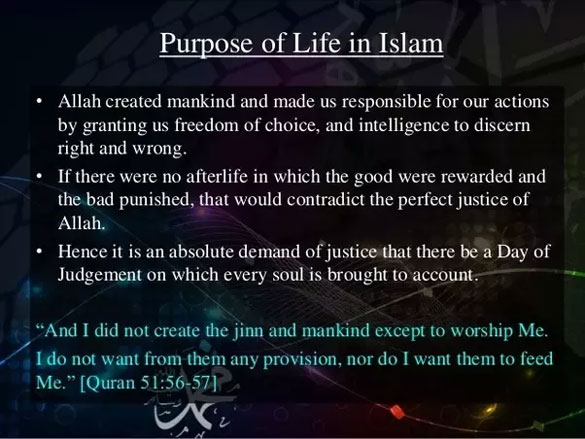
Allah says, “I have not created men except that they should serve Me” (Quran, 51:56).

Indeed there are many verses in the Holy Quran which conclude that the humanity is created for nothing but the worship of Allah, the Almighty. So, there is nothing left to ponder upon the purpose of life on this earth except that to understand what is worship and what is it that pleases the creator of the seven skies and the earth and everything in it.

Indeed, there is no dearth of angels who always worship Allah, by praising Him, so the mankind is sent on this earth to worship Allah not only by reciting the Holy Quran and performing Namaz and observing Roza but in a way which should be called worshipping Allah with the human ingredients, such as:

a.   Giving Charity (Khairat)

b.  Visiting The Ill (Eyadat)

c.    Helping Others (Madad)

d.  Dressing Up Modestly

e.  Eating Halal Food

All the above mentioned human ingredients are the one we find in the persona of Prophet Muhammad (SAW). History is witness to our Prophet’s life as to how he distributed charity, visited the ill, helped the needy, dressed modestly and ate the simplest of the foods, possible.


Muslims worship Allah to obtain His kindness and pleasure. And Allah is pleased if one follows the life and deeds of His beloved prophet, Prophet Muhammad (SAW). Therefore if the purpose of life is to worship Allah to obtain His love and resultantly His forgiveness, what may be better than following the footsteps of our beloved Prophet and fulfil the purpose of our lives?

First verse mentioned above describes the purpose of life as the worship of the creator of the universe, and it also clearly mentions that there is no nation to which a Prophet has not been sent, meaning thereby that every nook and corner of this world has received Allah’s kindness in the form of a Prophet to guide human being, to make humankind understand the purpose of their lives, all of us therefore will be answerable on the Day of Judgment to Allah and will not be able to say that we were not guided.

Righteous or Non-Righteous Actions of an Individual

Righteous or non-righteous actions of an individual will decide Allah’s love for him and ultimately His forgiveness and rewards. Righteous people will be granted rewards and the non-righteous people will be punished as per Allah’s will. They will not find any excuse to hide behind. Such is the management of the God.

Everything the righteous individual does for the sake and submission to Allah should go in favour of His creation, the human beings, the animals, the environment and the nature, at large.  Righteous people are those who take the path of Sunnah and contribute to the welfare of the fellow human beings as guided by Prophet Muhammad (SAW) who always asked for forgiveness for all his fellow human beings of the past, present and the future.


The Prophets and the Revealed Books

Allah has made us aware of the purpose of our lives through His messengers, from Adam to Prophet Muhammad (Pbuh) and all His Books revealed from time to time on the prophets of the time.

Every prophet sent by Allah to guide His creation has guided to the best of his ability and Allah’s willingness and every Book revealed by Allah on His prophets had the guidance through which men of those times could have understood and fulfilled the purpose of their lives.

Fulfilment of the Purpose of Life

Fulfilling the purpose of our life is not difficult if our heart weeps for humanity and nature. Both Good and the Evil senses are there in our intellect, it is just that we have to be true to ourselves and listen to our religious and spiritual guides and act accordingly. For the fulfilment of the purpose of life, human being has to be aware of his anger, feeling of hatred and the ill feelings for fellow human beings and get rid of them. He has to worship the God, ask His forgiveness and remain true to his sense of humility.

Quranic Verses as a Guide

The holy Quran is Allah’s words. And there are many Quranic verses related to the purpose of life of the human being, to guide us. I mention some of them for our benefit and guidance:

Surah Ali Imran Verse 191 (Translation Abul Ala Maududi)

Those who remember Allah while standing, sitting or (reclining) on their backs, and reflect in the creation of the heavens and the earth, (saying): 'Our Lord! You have not created this in vain. Glory to You! Save us, then, from the chastisement of the Fire.

Surah Al-Hadid Verse 20 (Translation Abdul Majid Daryabadi)

Know that the life of the world is but a play and a pastime, and an adornment and a self-glorification among you and vying in respect of riches and children; as the likeness of vegetation after rains whereof the growth pleaseth the husbandmen, then it withereth and thou seest it becoming yellow, then it becometh chaff. And in the Hereafter there is both a grievous torment and forgiveness from Allah and His pleasure, and the life of the world is but a vain bauble.

Surah Al-Mu'minoon Verse 115 (Translation Abul Ala Maududi)

Did you imagine that We created you without any purpose, and that you will not be brought back to Us?"

Tafheem-ul-Quran - Abul Ala Maududi (Quran, 5:91)

By intoxicants and games of chance Satan only desires to create enmity and hatred between you, and to turn you away from the remembrance of Allah and from Prayer. Will you, then, desist?

The last two verses clearly mention, as the other verses of the Holy Quran that our creation is not purposeless, in addition to this these two verses also mention that Satan misguides us in fulfilling our aim of life and achieving the love of Allah by creating enmity and hatred among us. We, thus need to recognise the Satan in and among ourselves and get rid of the feelings of enmity and hatred.


And Allah knows the best.

URL:   https://www.newageislam.com/islamic-society/arman-neyazi-new-age-islam/islam-answer-humanitys-search-meaning-purpose-life/d/124634


New Age IslamIslam OnlineIslamic WebsiteAfrican Muslim NewsArab World NewsSouth Asia NewsIndian Muslim NewsWorld Muslim NewsWomen in IslamIslamic FeminismArab WomenWomen In ArabIslamophobia in AmericaMuslim Women in WestIslam Women and Feminism