

New Age Islam’s Selection from Indian Press
7 August, 2015
The Question Whether IS Has Been More Brutal Than the US: The US Would Far Exceed Its Adversary by Sheer Number and Ruthlessness
By Mohammad Badrul Ahsan
How Do Political Islamists Legitimize Their Sins?
By Orhan Kemal Cengiz
Why Breastfeeding Should Be an Essential Parenting Choice
By Hiba Masood
Compiled By New Age Islam Edit Bureau
-------
The Question Whether IS Has Been More Brutal Than the US: The US Would Far Exceed Its Adversary by Sheer Number and Ruthlessness
By Mohammad Badrul Ahsan
August 07, 2015
Rutgers University professor Deepa Kumar has set off a blaze after she tweeted that the United States is more brutal than the Islamic State. The rationale for her contention is that the US has killed 1.3 million people in Iraq, Afghanistan and Pakistan. And, exactly how many people ISIS may have killed so far? She didn't mention it, although a UN report suggests 24,000 Iraqi civilians were killed by IS in the first eight months of 2014. Extrapolation at this rate gives ballpark indication that IS couldn't have crossed the US figure in roughly three years of its existence.
James Lucas of Countercurrents.org estimated that covert and overt US criminal wars of aggression caused 20-30 million deaths of human beings since World War II. Why these people were killed obviously have two contrary versions. The American side and its allies argue with immense passion that these people were the necessary cost of honest efforts to save the world. The victims and their sympathisers contend that the USA killed because it poked its nose where it didn't belong.
The Lucas estimate also determined that a total of 37 nations in the world suffered US cruelty during roughly 70 years. It said that US forces were directly responsible for about 10 to 15 million deaths in Korea and Vietnam. The US hands were also involved in the deaths of 9 to 14 million people in Afghanistan, Angola, Democratic Republic of the Congo, Guatemala, Indonesia, Pakistan and Sudan. Since the counting was done in 2007, the number of deaths that have occurred in Iraq, Syria, Afghanistan and Pakistan since then weren't included.
Conquests have always come to the vanquisher at the expense of the vanquished. And, communism is one example in the 20th century when people died for an ideological cause instead of territorial or other ambitions. A conservative calculation states that between 1900 and 2000, 94 million people perished in China, the Soviet Union, North Korea, Afghanistan, and Eastern Europe. During the same period, 28 million had died under the fascist regimes.
More people died in the last century as a result of communism than from homicide (58 million) and genocide (30 million) combined. The combined death tolls of WWI (37 million) and WWII (66 million) exceed communism's total by only 9 million. If we look at the natural causes, animals killed 7 million, natural disasters 24 million and famine 101 million. Religion killed much less in the 20th century, as Juan Cole claims that out of 120 million killed in various wars only a small fraction, roughly 2 million, of that was the result of Muslim killings on account of political violence, fundamentalism and terrorism.
Even though 7.1 billion people inhabit the Earth, the total accumulation of people, living and dead, has reached 108 billion. Recorded history shows that out of them roughly 800 million people died in wars, famines, prisons and death camps, floods and landslides and other deadly events. Besides these wholesale deaths, an unknown number must have died retail deaths due to snakebites, attacks by hungry animals, family violence, robbery, car accidents, boat capsizes, natural disasters and other accidents. Rest of the human beings died in their beds suffering from the normal wears and tears of life such as old age and illness.
The question whether IS has been more brutal than the US is ever more relevant now than before. If the beheading part is excluded and killing is viewed as a contest, the US would far exceed its adversary by sheer number and ruthlessness. The drone attacks are probably the most cold-blooded and calculated act of murder in human history. Unmanned aircrafts carry out precision strikes piloted by trained crews sitting at a base.
Throughout history, subjugators have given different names to their targets: idolaters, infidels, rivals, rebels, revolutionaries, communists, fundamentalists, militants and terrorists. And they have killed indiscriminately in the name of kingdoms, religion, and ideology. What IS has been doing to its hostages and captives are atrocious and repulsive. What the US did in Hiroshima and Nagasaki in Japan, Mai Lai in Vietnam and Baghdad in Iraq was no less perverse and even worse. Many more people died as a result of these actions.
It boils down to a pathetic presumption of human condition. Since the dawn of mankind, death has been bringing out the flavour of life. Trickling down war, destruction, vengeance, misfortune and mishap, the human destiny evolved through countless trials and tribulations.
But who gets more blame is a matter of perception. Mao Zedong's communist regime is responsible for the deaths of 60 million people, Joseph Stalin 40 million and Adolf Hitler 30 million. Yet, Hitler is hated more than others, because history is a cooked book. Debits and credits are misplaced in it to pull the wool over our eyes.
Mohammad Badrul Ahsan is the Editor of weekly First News and an opinion writer for The Daily Star.
Source: http://www.thedailystar.net/op-ed/politics/history-pulls-the-wool-over-our-eyes-123010
------
How Do Political Islamists Legitimize Their Sins?
By Orhan Kemal Cengiz
August 06, 2015
I am currently reading a book on the Islamic State in Iraq and the Levant (ISIL) that was recently published: “ISIS, Inside the Army of Terror” written by Michael Weiss and Hassan Hassan.
At the beginning of the book there is a fairly striking anecdote that I would like to share with you. The writers tell us the story how Abdelaziz, a young militant from Bahrain, joined ISIL, what he felt after joining the group, what he experienced and so on.
Let's read a few paragraphs from the book: “In ISIS, Abdelaziz discovered new things about himself. He learned that he was violent, brutal, and determined. He beheaded enemies. He kept a Yazidi girl in his house as a sabiyya, or sex slave. She was his prize for his participation in battles against the Iraqi Kurdish peshmerga forces and other Kurdish militias in Sinjar, Iraq, near the Syrian border…
“Abdelaziz showed us a picture of his sabiyya. She was in her late teens. She ‘belonged' to Abdelaziz for about a month before she was handed off to other ISIS commanders. Being a rapist didn't seem to impinge on what Abdelaziz considered his moral obligations as a pious Muslim…”
Well, so far the writers tell us a story we all know to a certain extent. We know ISIL has “sex slaves”; they rape these women, they sell them like refrigerators or cars in markets. They have guidelines on how to treat sex slaves and so on. We know these sex slaves are the daughters and wives of those who were massacred by the group. We know all this brutality.
There is something, however, these writers tell us just a few sentences later that provides enormous material to understand how the minds of political Islamists work. Fasten your seat belts and get ready to read this from the authors: “One of his fellow warriors said that during news broadcast Abdelaziz would cover the television screen to avoid seeing the faces of female presenters.”
The writers continue to add: “He (Abdelaziz) fervently quoted the Quran and hadith, the oral sayings attributed to the Prophet Muhammad, and spoke pompously about al-Dawla, the ‘state,' which is the term ISIS uses to refer to its project.”
Well, we have a portrait, and obviously it is not unique to an individual, of a man who systematically rapes a captured girl on the one hand but is so religious that he even cannot look at the face of a female presenter on TV on the other. In the same vein we have political Islamists in Turkey who pray five times a day and who never skip a day of fasting on Ramadan but on the other hand do not see any problem in corruption, lying or breaching laws and rules.
Apparently, for some, religion provides an endless source of legitimacy as long as they observe some formal rules of their religious beliefs. And this “legitimacy” creates an unbreakable barrier to see themselves and their actions as they are.
Abdelaziz's story tell us a lot about how political Islamists legitimize their actions and provide a lot of food for thought.
todayszaman.com/columnist/orhan-kemal-cengiz/how-do-political-islamists-legitimize-their-sins_395767.html
-------
Why Breastfeeding Should Be an Essential Parenting Choice
By Hiba Masood
August 7th, 2015
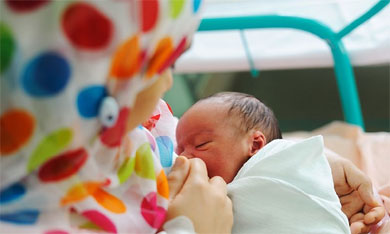
“Didn’t you find breastfeeding hard?” my friend asks me casually, watching my son as he makes his way down the stairs of her home, towards us. She’s just had her first baby and we’re visiting with balloons, little onesies and a plush tiger that growls when you press his belly.
I pause before answering.
The question seems harmless enough and yet it is fraught with all the collective anxiety over parenting and its choices that modern motherhood brings.
My answer, if given any length at all, risks coming armed with a halo and an air of reproach. I have already spotted a bottle and a can of powdered baby formula on my friend’s dresser. And I cannot see, but I can sense the tentativeness, the tremulous uncertainty mixed with overpowering determination that is new motherhood behind her questions.
When you say you breastfed your baby for over two years, people look at you knowingly. Ah, a fanatic, their eyes say. I always turn away, unwilling to engage in a subject so laden with nuance.
Yes! I am a fanatic, I want to say. I am utterly and unabashedly enthralled with the nursing life. Spend an hour with me, and I will leave you convinced that there is no other parenting choice as essential, as primal to your relationship with your child, as vital to his and your emotional and physical well-being.
At the same time, I also want to say: No! I’m a nursing fanatic only for my own kids. I hold no judgment for you and your nutritional choices. Motherhood is complex and we’re all trying our best!
As I consider how to answer my friend, I think back to the moment when my firstborn was handed to me. He latched on immediately. Amidst the overwhelming sensation of being gifted the most precious and beautiful person on earth, I recall being amazed by our joint nursing prowess.
And I didn’t know it then, but I would become a milky, multi-tasking champion. I would be able to nurse my child and do anything at all simultaneously, including shopping or cooking dinner for a party of 20.
Breastfeeding? Hard?! I would be astounded by the protests from my friends. How is it hard? What could be easier than holding your baby to your heart?
There are secrets only breastfeeding mothers know: The first latch. The feeling of fullness as your milk lets down. How a little hand feels as it rests on your chest, in that bony space right above your hear-tbeat. The tiny pop when you break the suction and your baby, satiated, nestles into you. The bursting pride of nourishing your child using your own body. Those first two years of my son’s life were the easiest years of my life.
Later, my boy will become the most difficult, enraged three-year-old. With every tantrum I will be left shaking and broken. He will have a speech delay and we will struggle to understand each other. In those times, I will remember the breastfeeding years. That secret universe of ours where we both spoke the same language, where nothing was lost in translation.
Also read: Report highlights problems in breastfeeding promotion
My boy is six now. He is utterly self-directed, completely independent of my opinion in anything. Two days after his last feed, I asked him about it casually – testing him. How much of our time together do you remember? How much did it mean to you? I was shocked when he shrugged off my question and walked away. He was wholly uninterested. It is clear he weaned me as much as I weaned him. He did not remember then or now.
But I remember.
My body remembers. When I nursed his two sisters for the first time, I was only thinking of him and that first moment of motherhood. When, even today, I come across a picture of me and him during his babyhood, those trusting eyes, that total and complete knowledge that we had of each other, I choke up. How have we suddenly stopped understanding each other? A couple of months ago, when I heard my brother’s baby crying in other room, I felt that familiar sudden fullness. I excused myself to the bathroom, checked that my shirt hadn’t gotten visibly wet, and inexplicably found myself wiping away tears.
And this is what, years on, two more children and a thousand motherhood moments and choices later, I finally understand. I was lucky that breastfeeding my son was easy. For us, it was everything that came afterwards that was hard. For other mothers, it’s sometimes the other way around. And so, breastfeeding becomes a microcosm of parenting.
Also read: Breastfeeding can reduce infant mortality rate
My friend, the newly minted mama, carefully holding the her child, watching my tall six-year-old boy jump down the stairs, isn’t asking about breastfeeding. She’s asking about parenting. All of it.
“Yes, it was hard.” I tell her simply. “It still is.” And it is the truth.
Breastfeeding is hard. And it is easy. It is complicated and utterly simple. It is terrifying and exhausting and yet, exhilarating. But most of all, it is always worth it.
Just like parenting.
Just like life.
World Breastfeeding Week (WBW) is an annual celebration which is held every year from 1 to 7 August.
Hiba Masood is a writer, an entrepreneur and a motivational speaker. She writes about parenting, women and life every day on her Facebook page.
Source: dawn.com/news/1198546/why-breastfeeding-should-be-an-essential-parenting-choice

No comments:
Post a Comment