
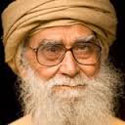
By Maulana Wahiduddin Khan for New Age Islam
October 13, 2013
(Interview By ANI Journalist, Agra)
Q: Namastey! Salam! I want a few words of blessing from you.
A: Namastey! I pray for everyone—that they make themselves good and that they work for the betterment of the country.
Q: I’m very fortunate to interview a person like you. You have been working for peace and against terrorism for a long time. Terrorism has become a major problem for the country. Since it is such an immense problem, how do you think it can be solved? Don’t we need many more efforts than at present?
A: My mission is not crowd-based. It is individual-based. I address the individual, each person. We seek to help them transform their minds, their thinking. Across the world, many individuals have changed themselves through the efforts of this mission. They’ve abandoned negative thinking and have taken to positive thinking—even in countries that have earned a bad name for themselves, like Pakistan.
Q: You have received many national and international awards. This must have given you great joy.
A: I don’t get joy through these things. I feel joyful when I see an individual being transformed for the better. When someone tells me that he has abandoned hatred and left negativity and violence, I feel very happy.
I don’t get happiness from awards. People just give them to me and I accept them.
Q: If you don’t get happiness from getting awards, at least they might act as an incentive for you to carry on with your work, is it not?
A: No. I never talk about the awards, not even with any of my companions. I don’t even think about the awards. I don’t even remember which awards I have got. My work is my mission. Giving or not giving awards may be other people’s work.
I don’t give any importance to awards. I consider human beings as important. If someone reads something that I have written, or listens to something that I’ve said and changes into a positive thinker, I regard myself as successful, and this gives me much joy. Almost everyone lives in negativity, in hate, in tension. And so, when someone says that he has given all this up, I am truly happy.
Q: Many people have been transformed by your work. But still so much remains to be done.
A: There will always be something that remains to be done. One has to accept this as a reality. People who join our mission and become committed to it continue to face challenges, but they try to respond to them positively, through positive thinking.
If you expect to be happy only when all your problems have been solved once and for all, you will never be happy. So, accept the fact that there will always be issues, that there will always be challenges. Try to avoid getting into negativity. This is will help you to be happy.
Q: You have been trying to counter terrorism and promote peace. But terrorism still remains a problem in India, including Pakistan-sponsored terrorism in Kashmir. What do you have to say about this?
A: In Kashmir, internal terrorism has almost ended. Terrorists active in Kashmir are now mostly from Pakistan, who have infiltrated from across the border.
Our mission’s work in Kashmir has made a major impact in changing the minds of many Kashmiris, in helping them realise the futility of violence and the value of peace.
Q: There are many followers of your mission in Pakistan. What do you want to tell the people of Pakistan?
A: In Pakistan, there are many people who read our literature. Some of them sometimes call me on the phone or listen to my programmes hosted on the Internet. They tell me how this mission has helped them abandon negativity.
So, at the level of individuals, there are many Pakistanis who have been transformed with the help of this mission. As far as relations between India and Pakistan are concerned, there are issues that concern the governments of the two countries, and that’s a different matter. We are doing our part in spreading the message of love.
Q: You have received many awards for promoting peace and inter-community harmony. Despite this, inter-communal hatred and violence show no sign of abating in India. Is your message not reaching people?
A: I see the matter differently. If you compare the India of 1947 with the India of today, there’s a big difference. In 1947 and the years that followed immediately after, there were deadly communal riots in India. And these happened regularly. Today, far fewer riots happen, and then these are mainly during or just before elections, for political purposes, after which they quickly die out.
So, I would say that communalism has declined. It means that people like us who are working for peace and harmony have not failed.
What often happens is that a clash happens in one locality of a town and some sections of the media abroad project it as India being rocked with riots. Now, I don’t blame the media, because it is an industry that is based on ‘hot news’. But I do say that one should not form an opinion about things simply on the basis of what the media might say about it. I don’t condemn the media. I read the media, but I use my intelligence to form an opinion about anything.
Q: The socio-economic conditions of Muslims in India are quite dismal. What do you think should be done to address this issue?
A: Any community—Muslims or Hindus or any other—must progress through its own efforts. No one else can do anything for it. No one can gift you progress from outside. You have to progress through your own initiative.
Q: There’s so much violence in India today. It’s increasing by the day. The country’s name is getting tarnished. What do you have to say about this?
A: Violence was always there. It was there in the past. But at that time, there was no mass media, and so news about violence in one place did not travel to other places, and so people elsewhere did not know about it. So, it’s not something new.

No comments:
Post a Comment